


Plunge Bra Guide: Find the Right Fit, Shape, and Support
A lower neckline doesn’t have to mean giving up support. A plunge bra has a low center front that creates space for deeper necklines, but that feature alone doesn’t determine how the bra will feel or fit. You may wonder whether the center should sit flat, how much movement is normal, or whether plunge, push-up, and balconette styles do the same thing. They don’t, although some designs combine features.
For a useful fit check, look at the whole bra: the band should feel secure, the cups should contain breast tissue without gaping or cutting in, and the straps should stay comfortably in place. This guide explains what defines a plunge bra, how to assess the center front, band, cups, and straps, and how plunge styles compare with push-up and balconette bras. Use those checks alongside your preferred neckline, coverage, and feel to decide which shape suits you.
Key Takeaways
- Identify a plunge bra by its low center front and cup shape, rather than relying on the style label alone.
- Assess how the band, cups, straps, and center front work together to provide coverage and a secure feel.
- Compare plunge, balconette, and push-up styles by their silhouettes and defining features, not by assuming one is universally best.
- Use a simple try-on sequence to check the band, cups, straps, and center front before deciding whether a plunge bra feels comfortable.
- Choose a style based on your preferred neckline, coverage, and feel, then review the fit notes for the specific bra.
What Is a Plunge Bra? Understand Its Low-Center Shape
A plunge bra has a low center front, the section between the cups, creating a deeper V-shaped opening at the neckline. Its silhouette depends on the height of the center and the angle and cut of the cups, not just the style name. Since designs vary, check the garment’s shape and details as well as its label. The plunge bra entry also places this style among bra shapes suited to low-cut necklines.
The open center can make a bra less visible beneath a deep neckline, while the cups frame the bust from either side. The outline depends on how the cup edges rise and curve, so two plunge bras may look different under the same top.
Which design details create the plunge silhouette?
The center gore, or bridge between the cups, sits lower than it does in many other bra shapes. The cups angle upward and outward from there, forming a V that leaves more space at the center of the neckline. The depth and width of that V vary by design.
Coverage varies too. Some cups extend higher at the outer edge, while others have a more open cut. Padding and underwire are design choices, not requirements of the plunge silhouette. If you’re choosing a bra for a low-cut garment, compare the garment’s neckline with the cup line. A bra may have a low center yet still show at the sides or along the cups, depending on both cuts.
What is the difference between plunge and push-up bras?
Plunge describes shape; push-up describes an intended effect. A plunge bra is defined by its low center and open neckline. A push-up bra uses padding or cup construction intended to create lift or bring the breasts closer together. The terms aren’t interchangeable: a bra can combine a low center with push-up padding, but a plunge silhouette doesn’t automatically include that padding, and push-up styling doesn’t always have a low center.
When comparing styles, consider the neckline you want and the cup feel you prefer instead of assuming the label promises a particular level of lift or coverage. For more context on shape and comfort, read the bra guide to fit, form, and everyday comfort.
How Plunge Bra Construction Shapes Neckline, Coverage, and Support
A bra’s outline and feel come from several parts working together, not from the center front alone. The band anchors the fit around the body, the cups shape and contain the bust, and the straps help keep the cups positioned. The center gore joins the cups, and its height and width affect how the bra sits at the front. The balance of these features varies by design and individual fit.
Under a low-cut top, the neckline depth determines how much of the bra’s upper edge may show. A deeper V may leave more of the chest uncovered, while a higher cup edge may appear above the garment. Compare the clothing’s neckline with the bra’s cup line while standing and moving naturally. A bra that looks discreet when still may shift into view as you move.
How do the cups and center gore affect fit?
The center gore is the panel between the cups, and its height differs by design. The cups should generally contain breast tissue without gaping at the top or cutting in. The gore should rest comfortably against the body when the bra’s construction and your shape allow. Treat these as useful fit checks, not guarantees: breast shape, bra design, and individual fit all matter. For more signs to look for, consult this guide to how your bra should fit.
Does a plunge bra provide enough support?
A low center doesn’t automatically mean less support. Support depends on the bra’s construction, how it fits, and what feels secure for you. The band is an important foundation: it should feel anchored around your body without digging in or riding up. The straps shouldn’t have to compensate for a loose band. Cup shape and strap placement also affect how comfortably the bra stays in position.
Coverage describes how much the cups enclose, lift describes how the bust is raised or shaped, and support describes how securely the bra holds everything in place. These qualities are related, but they aren’t interchangeable. For another perspective on how construction affects feel, read the wireless bra guide to comfort, fit, and support. Explore ELSE’s contemporary bras and intimate apparel with those fit priorities in mind.
Plunge Bra vs. Balconette and Other Styles: Compare the Silhouettes
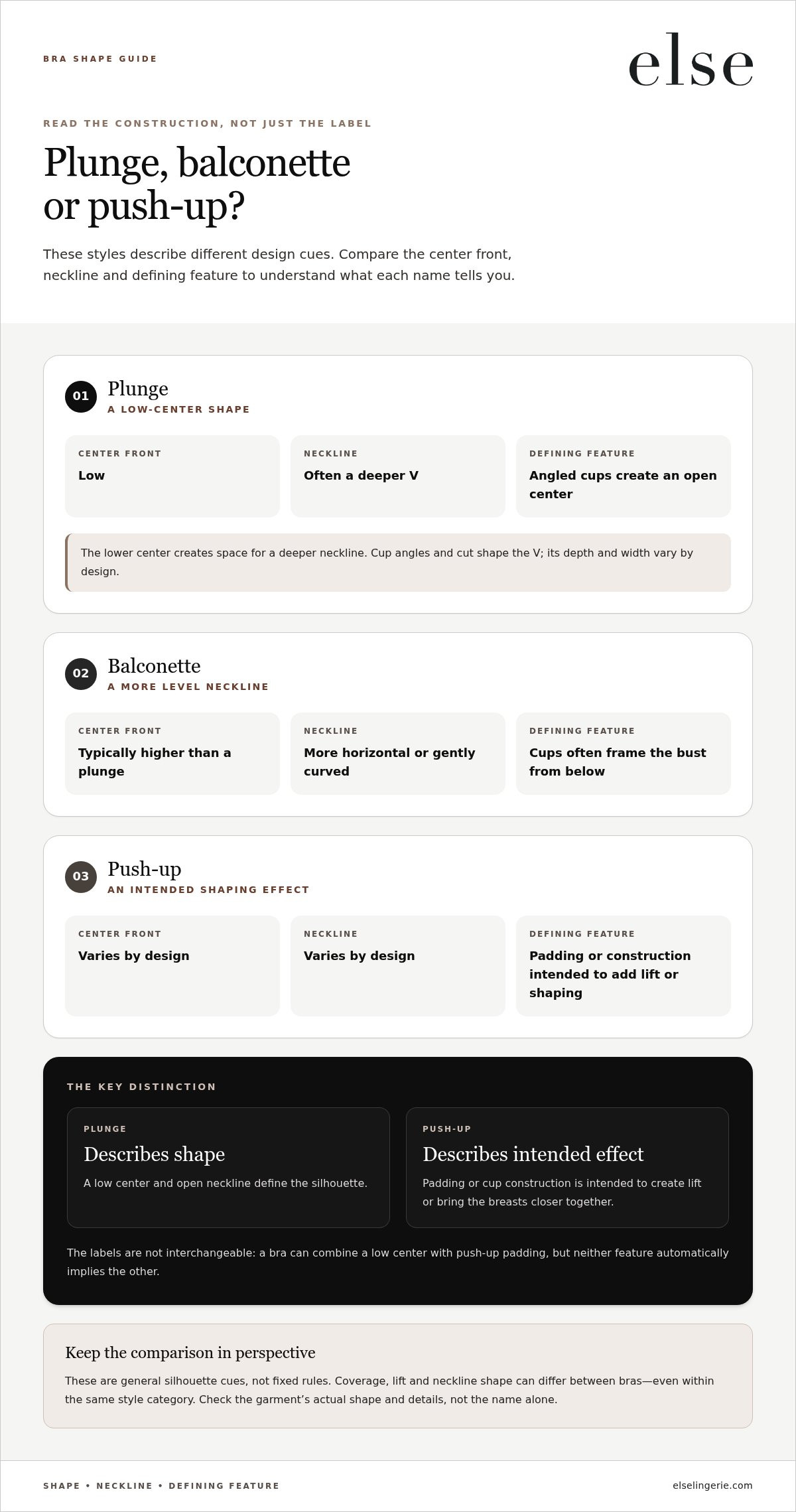
Bra names can describe different aspects of a design, and features may overlap. A plunge shape is identified by its lower center front, while a balconette generally has a more horizontal neckline. Push-up refers to an intended lifting or shaping effect, often created through padding. The comparison below focuses on construction, not on how to style each shape with an outfit.
| Style | Center-front shape | Neckline | Defining feature |
|---|---|---|---|
| Plunge | Low center front | Often a deeper V | Angled cups create an open center |
| Balconette | Typically higher than a plunge | More horizontal or gently curved | Cups often frame the bust from below |
| Push-up | Varies by design | Varies by design | Padding or construction intended to add lift or shaping |
These are general silhouette cues, not fixed rules. Cup coverage, lift, and neckline shape can differ from one bra to another, even within the same style category. The Underpinnings Museum’s overview of technology and the bra offers additional context on how construction shapes a bra’s form.
How is a plunge bra different from a balconette bra?
The clearest distinction is where the cups meet and how their upper edges run. A plunge usually has a low center and cups that angle toward it, while a balconette tends to create a more level line across the top of the bust. Neither shape dictates a fixed amount of coverage or lift. Those depend on the cup design and fit.
When might another bra silhouette suit you better?
Start with your preferences: the neckline you want, how much cup coverage feels comfortable, and whether the bra stays secure through your usual movement. A more horizontal cup line may suit you if you prefer that shape; a lower center may work better with a deeper V. Don’t assume bust size or body shape alone determines the best choice. For garments that call for bare shoulders, see the strapless bra fit and support guide.
Once you’ve chosen a silhouette, consider how it works with your outfit. Explore ELSE’s contemporary bras and compare shapes with your preferred comfort and coverage in mind.
How to Check the Fit of a Plunge Bra Step by Step
A well-fitting bra should feel secure without needing constant adjustment. Try it on in front of a mirror, then move gently to see whether the band, cups, center front, and straps stay comfortable together. Use this sequence as a practical guide, keeping in mind that fit can vary with the bra’s construction and your shape.
- Start with the band. Fasten a new bra on its loosest hook, leaving room to tighten it as the band stretches with wear. It should sit level around your body and feel secure without digging in or riding up your back.
- Settle the cups. Lean forward slightly and guide breast tissue into the cups. Check the edges for spillage or persistent gaps. Either may mean the cup shape or size isn’t sitting comfortably.
- Check the center front. Notice whether the gore rests comfortably against your body or presses, pinches, or feels out of place. Its position can depend on the design, so assess it alongside the cups and band.
- Adjust the straps. They should stay in place without digging into your shoulders. Adjust them gently as needed, but they shouldn’t have to carry all the support.
- Move naturally. Raise your arms, turn, and take a few comfortable steps. Look for shifting cups, slipping straps, or a band that moves out of position.
A comfortable, secure fit stays in place without pain; a tight fit relies on pressure and can leave you wanting to adjust it. Secure shouldn’t mean constricted.
What signs suggest the fit needs adjusting?
Recurring cup movement, pinching, slipping, uncomfortable pressure at the center front, or a band that rides upward are reasons to pause and reassess. Rather than changing the straps alone, check the band and cups together: adjusting one can affect how the other sits. For foundational fit guidance, see the bra fit and form guide.
Once you know what feels secure and comfortable, explore ELSE bras with those fit priorities in mind.
How to Choose a Plunge Bra That Feels Right for You
Let your preferences guide the choice. A plunge bra can create an open neckline, but its depth, cup shape, and feel differ by design. Use your own comfort and the garment’s details as a guide. First decide what you want the bra to do, then look for a silhouette that feels natural on you.
Which details matter most when selecting a plunge bra?
Start with the features that affect both appearance and everyday comfort:
- Center-front height: Consider how low you want the neckline to sit and whether the center front feels comfortable against your body.
- Coverage: Check the cup shape and edges. They should provide your preferred coverage and contain breast tissue without gaping or cutting in.
- Band and straps: Look for a band that feels secure and stays in place, with straps that sit comfortably rather than compensating for the fit.
- Feel and construction: Review the garment details for information about fabric, lining, or construction. Don’t assume these features are the same across all plunge bras.
Product descriptions and fit notes help you compare bras when the style name alone doesn’t tell you how deep the neckline is or how the cups are shaped. Focus on the details for the specific design. If possible, assess the bra through your usual range of movement, not only while standing still.
How can you wear a plunge bra with confidence?
Try the bra with a familiar top that has the kind of lower neckline you want to wear. Check the outline from the front and sides, then move naturally to see whether the bra stays comfortable and discreet where you want it. If more of the cups show than you prefer, that tells you how the garment and bra work together. It isn’t a reflection on your shape.
Choose the silhouette that feels right on your body: a comfortable fit, the coverage you prefer, and a neckline that suits your wardrobe. There’s no single right answer, only the design that feels like you.
Explore ELSE lingerie and discover contemporary bras and intimate apparel.
Choose a Shape That Feels Like You
A plunge bra is defined by its low center front, but the label alone won’t tell you how the cups feel or how the neckline sits. Compare the garment’s coverage and construction, then check that the band feels secure, the cups contain comfortably, and the straps stay in place without digging. A considered fit should feel supportive, not restrictive.
Let your preferred neckline, coverage, and comfort guide your choice. Small differences in cup shape and center height can change how a bra feels and looks, so trust your own fit rather than a rule about body shape. ELSE brings a design-led perspective to contemporary lingerie and apparel.
Explore ELSE lingerie and find intimate apparel that reflects your sense of comfort and style. The right choice is the one you can wear with ease and confidence.
Frequently Asked Questions
What is a plunge bra?
A plunge bra has a low center front between the cups, creating an open, often V-shaped neckline. The exact depth and coverage depend on the cup shape and design, so the label can describe different looks. It describes the silhouette, not a guaranteed level of padding, lift, or support. Check the garment’s shape and fit notes to understand how it may sit on your body.
Is a plunge bra the same as a push-up bra?
No. Plunge describes the bra’s shape, especially its low center front and neckline, while push-up refers to a design intended to add lift or shaping, often through padding. A bra can combine both features, but one label doesn’t automatically mean the other. A plunge style may have little or no padding, while a push-up style may have a higher center front.
Can a plunge bra provide enough support?
A plunge bra can feel supportive if its construction suits your needs and the fit is comfortable and secure. A low center front alone doesn’t determine support. Consider whether the band anchors around your body, the cups contain comfortably, and the straps stay in place without digging in. Designs differ, so assess the individual bra rather than assuming all plunge styles offer the same support.
How should a plunge bra fit?
A plunge bra should feel secure without pinching or restricting your movement. The band should sit level and stay in place, while the cups contain breast tissue without persistent gaping or cutting in. Straps should remain comfortable rather than carrying all the support. Check how the center front feels, then raise your arms and move gently to see whether the bra shifts or needs frequent adjustment.
What is the difference between a plunge and a balconette bra?
A plunge bra usually has a lower center front and cups that angle toward it, forming a deeper V. A balconette typically has a more horizontal or gently curved neckline, with cups that frame the bust from below. Coverage and lift vary within both silhouettes, so these are general design cues rather than fixed rules. Compare the actual cup edges and center-front shape when considering a specific bra.
What happens if the center of my plunge bra does not sit comfortably?
If the center front presses, pinches, or feels unstable, don’t ignore the discomfort or assume you need to tighten the straps. Recheck how the band and cups fit together, since either can affect where the bra sits. The center gore’s shape and height also vary by design, and some constructions may rest differently against the body. If discomfort continues, try a different size or silhouette that feels more natural.
