

Bra Guide: Finding Your Fit, Form, and Everyday Comfort
What makes a comfortable bra has less to do with the size printed on its label than with how its band, cups, straps, and fabric work together. Sizing can feel inconsistent across brands and styles, while unfamiliar silhouettes make it harder to know what to try. Treat the label as a starting point, then check the details you can feel.
If you’ve wondered whether the band should feel snug, how cups ought to sit, or why one shape feels better than another, you’re not alone. A good fit should feel secure without digging or shifting. The cups should lie smoothly, and the straps should stay in place without taking on the band’s job.
This guide explains how fit, silhouette, and fabric affect comfort and appearance, so you can choose a bra with greater confidence. You’ll find practical fit checks, comparisons of common styles, and ways to match fabric and support to your preferences and daily routine.
Key Takeaways
- Use size labels as a guide, then assess how the bra feels and sits on your body.
- Consider how coverage and neckline work with the clothes you plan to wear.
- Let your daily routine and preferred feel guide how much structure you want.
- Compare styles and fabric descriptions to narrow your options before choosing.
- Explore ELSE’s bra category with fit, silhouette, and personal preference in mind.
What a Bra Is Designed to Do: Support, Shape, and Comfort
Definition: A bra is a garment designed to cover and support the breasts. Its fit and construction influence comfort, shape, and how it sits beneath clothing.
That purpose can be expressed in many ways. Some designs offer more coverage or a more structured feel, while others prioritize a lighter, less defined silhouette. Comfort isn’t limited to one shape or level of support. It depends on how the garment fits your body and whether its feel suits your preferences and the day ahead.
Everyday lingerie is generally chosen for routine wear, personal comfort, and how it works with clothing. Specialist garments may be designed for a particular need, such as compression or post-surgical recovery, and aren’t interchangeable with everyday styles. If you’re considering a garment for a medical or recovery-related purpose, seek guidance from a qualified healthcare professional.
How a Bra’s Main Components Work Together
A bra’s parts work as a system, though their proportions and construction vary by design. The cups provide breast coverage and contribute to the garment’s shape. The band wraps around the torso and helps keep the bra in position. The wings are the side sections that connect the cups to the back. Straps help hold the cups in place and can be adjusted, while a closure, often at the back, fastens the band and may allow adjustment.
No single detail determines comfort on its own. A band that feels secure, cups that sit smoothly, and straps that don’t dig or slip all contribute to a balanced fit. For more context on the garment’s terminology and development, explore this overview of the history of the bra.
Why Personal Comfort Matters as Much as Support
Think about what you need the garment to do during an ordinary day. Sitting for long stretches, moving between activities, or wearing fitted clothing can each influence which shape, coverage, and level of structure feels right. The neckline of a top can also affect which bra feels comfortable and stays discreet beneath it.
Preferences matter just as much. You may enjoy a more held-in feel, or prefer less structure and greater ease. Neither is a universal standard. If bra shopping feels confusing, start by noticing what bothers you in a current style and what you’d rather feel. That comparison can make your next choice more considered, without expecting one silhouette to work for every body or occasion.
Bra Fit Explained: How Band, Cups, and Straps Should Feel
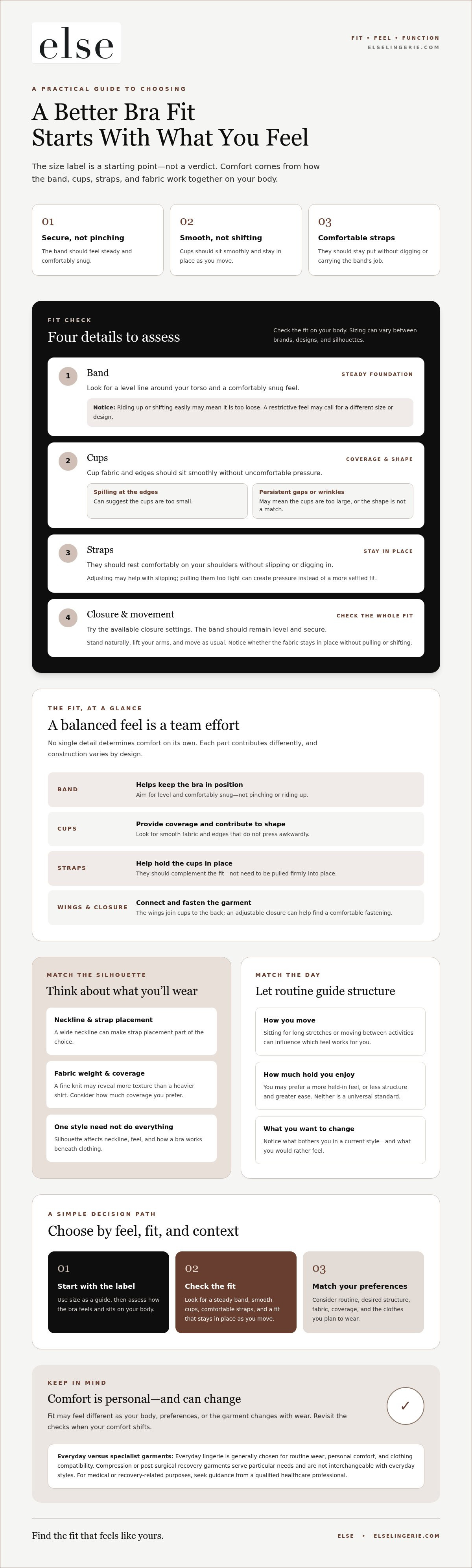
A size label is a useful place to begin, not a verdict on how a garment should fit. Sizing can vary between brands and designs, and even the same labeled size may feel different in another shape. Assess the fit on your body: check whether the band feels steady, the cups lie smoothly, and the straps stay comfortable as you move.
A well-fitting bra feels secure without pinching, with cups that sit smoothly and straps that stay in place without digging.
What to Check in the Band and Cups
Look at the band in a mirror. It should sit level around your torso rather than riding up at the back, and feel comfortably snug without pinching or making you eager to take it off. If it shifts easily or rides upward, the band may be too loose. If it feels restrictive, try a different size or design.
Check the cups, too. Spilling at the edges can suggest they’re too small, while persistent gaps or wrinkles may mean they’re too large, or that the shape doesn’t suit you. Cup edges that press or sit awkwardly can also signal a design mismatch. Stand naturally, then lift your arms and move as you normally would. The fabric should stay in place without uncomfortable pulling or shifting.
How Straps and Closures Affect Everyday Wear
Straps should rest comfortably on your shoulders and stay in place without digging in. If they slip, adjusting them may help, but overly tight straps can create pressure rather than a more settled fit. The band and cups should feel balanced with the straps, not dependent on them being pulled firmly into place.
An adjustable closure can help you find a comfortable fastening, while leaving room to reassess as the garment changes with wear. Try the available settings and notice whether the band remains level and secure. Fit can feel different as your body, preferences, or the garment itself changes, so revisit these checks if your comfort shifts.
Use these signs as practical guidance, not a rigid test. If you’re comparing silhouettes and want to see how a contemporary lingerie brand approaches the category, explore ELSE’s bra selection.
Bra Styles Compared: Match Shape and Coverage to Your Needs
Silhouette influences how a bra frames the neckline, feels against the body, and works beneath clothing. Rather than looking for one style to suit every outfit, consider the cut of your top, the fabric’s weight, and how much coverage you prefer. A fine knit may reveal more texture than a heavier shirt, while a wide neckline can make strap placement part of the decision.
The table offers a general starting point. Style names and construction can vary between brands and individual garments, so check the product description and images for the details that matter to you.
| Style | Design impression | Situations where it may suit |
|---|---|---|
| T-shirt | A smooth, streamlined outline | Everyday tops or lighter fabrics where a simple profile is preferred |
| Full coverage | A more encompassing shape | When you prefer greater coverage beneath shirts or workwear |
| Balconette | A more open upper line | Some wide or square necklines, depending on the garment’s cut |
| Plunge | A lower center front | Lower necklines where a higher center might show |
| Strapless | A strap-free outline | Strapless or off-the-shoulder clothing, if the fit feels secure |
| Wireless | A less structured feel | Days when you prefer a lighter-feeling alternative to wired designs |
Choosing a Silhouette for Necklines and Clothing
Start with the outfit, then think about how you want the garment beneath it to feel. A scoop-neck top may work with several shapes; a deep V can call for a lower center front. Thin or close-fitting fabric may make seams and edges more noticeable, while a structured blouse can offer more flexibility. These are useful considerations, not rules. Two people wearing the same neckline may prefer different coverage or strap placement.
How Structure and Coverage Change the Feel
More structured designs may feel more shaped or held in place; lighter, less structured options can feel more relaxed. Neither is inherently better. Coverage describes how much of the breast the cups encompass, not whether a style is more or less suitable. Your comfort, clothing, and personal taste help determine the right balance.
Wireless, balconette, strapless, and plunge designs each have distinct trade-offs worth exploring in dedicated guides. For this comparison, treat each label as a clue rather than a guarantee. Review the garment’s neckline, coverage, and construction, then consider how those details align with what you plan to wear.
How to Choose a Bra for Your Routine, Fabric Preferences, and Wardrobe
A useful choice starts with your own day, not a prescribed wardrobe. Consider how long you’ll wear it, what you’ll wear over it, and what kind of feel you prefer. A bra for a familiar daily routine may have different priorities from one chosen for a particular neckline or occasion.
Start with When and How You Plan to Wear It
Use this simple sequence to narrow your options:
- Start with the occasion. Is this for regular wear, a specific outfit, or an occasional need? Name the purpose before comparing styles.
- Think about movement and duration. Consider whether you’ll be mostly sitting, moving around, or layering through a long day. Choose a feel you’re comfortable wearing for that stretch of time.
- Check the fit. Revisit the band, cups, and straps on your body. A style that looks appealing still needs to feel settled and comfortable.
- Match it to your clothing. A lower neckline, open shoulders, or a lightweight top may influence the silhouette or coverage you prefer. Look at the garment’s cut and fabric rather than relying on a style name alone.
- Choose your preferred feel. Decide whether you want more coverage, less structure, or a particular neckline. Your comfort is the deciding point.
These are prompts, not rules. You might prefer more coverage under a loose shirt, or a lighter feel with a familiar outfit. Choose for your own comfort, even if your preference differs from what someone else might select for similar clothing.
Consider Fabric, Feel, and Care Before Choosing
Fabric affects how a garment feels against the skin and beneath clothing. Consider softness, texture, breathability, and any personal sensitivities. Seams or surface finishes may also influence your comfort. Product descriptions can help you compare options, but check the specific garment’s listed materials rather than assuming a fabric based on its style or appearance.
Care matters to everyday ease, too. Read the care label for each garment instead of assuming that all lingerie should be cared for in the same way. A dedicated lingerie-care guide can offer more detail once you’re ready to look after your choice.
Choose by considering your routine, fit, wardrobe, and preferred fabric feel, then select the coverage and structure that feel right to you.
Ready to put those preferences into practice? Explore ELSE’s online bras and compare the available details with what you’re looking for.
Finding Your Bra: A Thoughtful Next Step with ELSE
You’ve considered fit, silhouette, coverage, and the feel you prefer. Carry those priorities into browsing: start with fit, then consider the shape and coverage that suit your wardrobe, followed by the details that matter to your comfort. There’s no need to find one style for every outfit or occasion. A clear sense of what you want can make the options easier to compare.
ELSE is a contemporary lingerie brand that offers bras through direct online shopping. Founded by Ela Onur in 2008, the brand also operates its own dedicated atelier. That background provides context for ELSE’s design-led perspective, while your preferences remain the most useful guide to choosing.
What to Review Before Browsing Bras Online
Before opening product pages, summarize what you’re looking for. Note whether you prefer more coverage or a lighter feel, which necklines you wear often, and what helps you feel comfortable through a typical day. These notes are not rules; they’re a personal reference that can keep a broad selection from feeling overwhelming.
- Fit: Keep in mind how a comfortable band, cups, and straps should feel on you.
- Coverage and silhouette: Consider whether you prefer a more encompassing shape, a lower neckline, or less structure.
- Wardrobe: Think about the cuts and fabrics you reach for most, such as close-fitting tops or wide necklines.
- Feel: Note any preferences around texture, softness, and how the garment rests against your skin.
As you browse, review each current product page for its description, available details, and availability. Don’t assume that every style shares the same materials, construction, or fit. The page for each garment is the best place to check its specific information before deciding whether it matches your notes.
Explore ELSE Bras at Your Own Pace
A considered choice brings practical needs and personal taste together. You may be drawn to a clean, contemporary silhouette, but the details still need to align with how you want the garment to feel and fit into your day. Comparing individual descriptions with your priorities can help you browse with intention, without expecting a particular design to suit everyone.
When you’re ready, explore bras by ELSE and take time to see which available options reflect your preferences.
Choose a Bra That Feels Like You
The right choice brings fit, silhouette, coverage, and personal comfort into balance. Let the band and cups guide your fit check, then consider the necklines and fabrics you reach for most. A useful style isn’t the one that follows a universal rule; it’s the one that suits your body, wardrobe, and day.
That thoughtful approach is at the heart of ELSE’s contemporary lingerie perspective. Founded by Ela Onur in 2008, the brand operates its own dedicated atelier and offers bras through its direct-to-consumer online store. As you browse, review each garment’s current description and details, then trust your own sense of what feels comfortable.
Explore bras by ELSE at your own pace. With a clearer sense of what you want, choosing your next style can feel less like guesswork and more like a considered part of getting dressed.
Frequently Asked Questions
How do I know if a bra fits properly?
A comfortable fit feels secure without pinching, shifting, or requiring constant adjustment. Check that the band sits level around your body, the cups lie smoothly without gaping or spilling, and the straps stay in place without digging into your shoulders. Raise your arms and move naturally to see whether everything remains comfortable. If one part feels persistently restrictive or loose, try another size or shape.
How often should I measure my bra size?
There’s no universal schedule for measuring; reassess whenever your usual fit changes or feels uncomfortable. Changes in your body, preferences, or the garment itself can affect how a size sits. If the band begins riding up, the cups no longer lie smoothly, or the straps need frequent adjustment, take fresh measurements as a starting point, then try the garment on. A label alone can’t confirm comfort.
Can I wear the same bra every day?
You can wear the same style regularly if it remains comfortable and suits your needs, but rotating between garments may help each one rest between wears. Pay attention to signs of wear, such as a band that no longer feels secure or straps and fabric that have lost their shape. Comfort is the best guide: if it starts to feel different or less supportive, reassess the fit and condition.
What is the difference between a bra cup and a band size?
The band size refers to the measurement around your torso beneath the breasts, while the cup size represents the volume of the cups in relation to the band. Together, they form the size label, but they don’t describe every aspect of fit. Cup shape and garment construction also matter, so two bras with the same label may feel different. Use the size as a starting point and check how each part sits.
Which bra style should I wear under a T-shirt?
A smooth-cup style is often a practical option under a T-shirt because its surface may create a simpler outline beneath lightweight fabric. The result depends on the garment, the top, and your preferred coverage; seams, edges, or texture may still show through some fabrics. Check how the cups sit under the specific shirt and choose the silhouette that feels comfortable, rather than expecting one style to work with every tee.
How do I choose a bra for a low neckline?
Compare the neckline of your top with the bra’s center front and cup shape. A plunge style, with a lower center, may suit some V-neck garments, but cuts vary, so check the specific shape against your clothing. Consider the fabric and how much coverage you prefer, too. The best choice is one that feels secure and comfortable while working with the neckline you plan to wear.
How should I care for a bra?
Follow the care label on each garment, since materials and construction can call for different handling. Don’t assume every bra should be washed or dried the same way. In general, gentle handling and careful storage can help preserve a garment’s shape, but the label should guide the specific care routine. If you’re unsure about a particular instruction, check the product information before washing.
