

Makale: Lingerie Brands: A Guide to Style, Fit, and Design
Lingerie Brands: A Guide to Style, Fit, and Design
What makes a lingerie brand right for you may have less to do with a beautiful campaign and more to do with how its pieces fit into your day. With so many lingerie brands using similar language about softness, support, and style, compare the details that shape the experience: silhouette, construction, materials, fit guidance, and how a garment works beneath the clothes you wear.
It’s reasonable to want lingerie that looks considered without making comfort an afterthought. This guide explains how brands differ in aesthetic and everyday purpose, so you can identify options that suit your preferences, whether you’re drawn to streamlined essentials, expressive lace, or pieces that extend into sleepwear and swimwear.
We’ll look at fit, fabric, design, and practical wear, then show how to compare collections without relying on marketing language alone. ELSE is one design-led option, with lingerie alongside sleepwear and swimwear. Founded by Ela Onur in 2008, the brand brings several wardrobe categories together. Use the guidance below to find pieces that suit your own style and needs.
Key Takeaways
- Look beyond a familiar name to understand a brand’s design approach, product range, and fit guidance.
- Compare materials and construction details to understand how a piece may feel and sit beneath clothing.
- Explore lingerie brands by aesthetic and product focus to find options that align with your preferences.
- Build a shortlist around five considerations: use, feel, silhouette, fit needs, and care preferences.
- Start with one garment or wardrobe need, then consider how lingerie, sleepwear, and swimwear might work together.
How to Explore Lingerie Brands Beyond the Name
A lingerie brand is more than a label. Its design language, product range, fit guidance, and material choices give you a clearer sense of what to expect. One brand may favor clean lines and discreet finishes; another may use expressive lace, sheer panels, or statement details. These choices shape a collection’s look, but they don’t tell you exactly how an individual garment will feel or fit.
A recognizable name can help you discover options, but it can’t guarantee personal comfort. Fit varies with the specific cut and construction, as well as your own preferences. To compare brands consistently, consider five things: aesthetic, function, construction, assortment, and care. For broader context on the history and evolution of lingerie, its terminology and cultural meaning show how intimate apparel has taken many forms. This guide is an exploration, not a universal ranking. The right choice depends on what you want a garment to do and how you want it to feel.
What makes one lingerie brand feel different from another?
Visual language is often the first difference you notice. Minimal silhouettes can feel understated beneath clothing, while lace, mesh, or decorative details create a more expressive mood. A brand’s assortment matters, too. It may focus on everyday bras and underwear or extend into bodysuits and pieces intended for special occasions. These categories show a label’s range, but they don’t mean every silhouette will suit every wearer. Brand identity describes a collection’s overall character; fit is something to assess one garment at a time.
Which details should readers compare first?
Start with the pieces you actually wear and the clothes you wear over them. For a bra beneath a close-fitting top, look at its edges, seams, and overall shape. For underwear you plan to wear throughout the day, compare coverage and fabric feel. Check lining and construction as well as appearance, and read care instructions before choosing a piece for your routine. Brand fit is the match between a label’s design choices and a wearer’s preferences for feel, silhouette, support, and use.
This keeps the comparison practical. A delicate finish may appeal to you visually, while another fabric feel or construction may better suit daily wear. Treat each product detail as useful information, not a promise: first identify labels worth exploring, then assess the specific garments against your wardrobe and comfort preferences.
How Lingerie Brands Differ in Fit, Materials, and Design
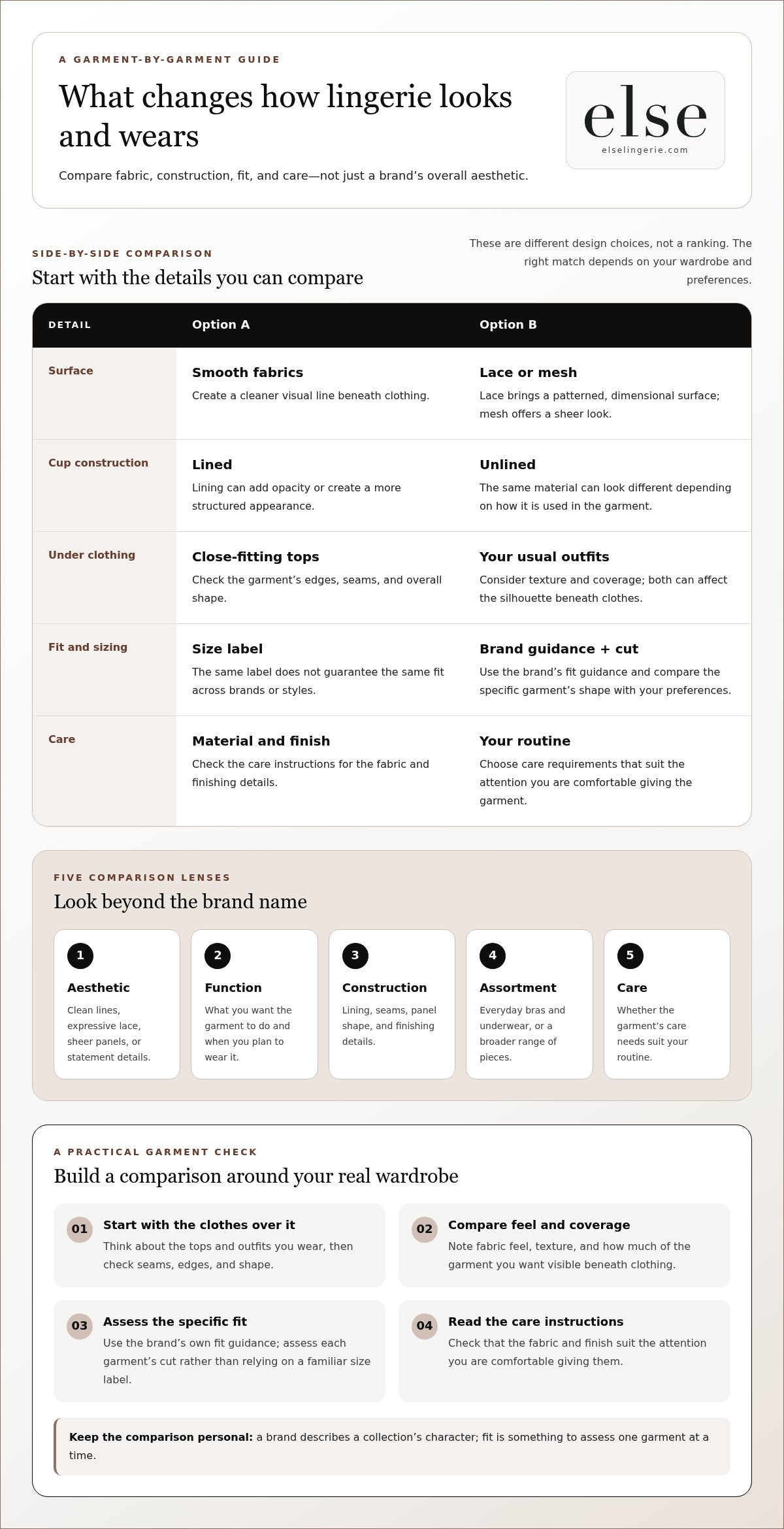
Two pieces in the same category can look and feel quite different. A simple, smooth bra may create a visually quiet layer beneath clothing, while lace or mesh adds texture and a more decorative quality. Neither aesthetic is inherently better. Consider which one works with your wardrobe and what you enjoy wearing. For a visual overview of the types of lingerie styles, compare how silhouettes such as bodysuits and other occasion pieces differ in shape and styling.
Materials influence both appearance and touch. Lace has a patterned, dimensional surface; mesh offers a sheer look; smooth fabrics create a cleaner visual line. Those descriptions can help narrow down what to compare, though they can’t predict exactly how a garment will feel on you. Lining can add opacity or create a more structured appearance, while seams and edges may show beneath close-fitting clothes. Coverage also affects the silhouette, so consider how much of the garment you want visible under your usual outfits.
How do materials and construction shape the experience?
Look beyond the fabric name to how it is used. A lined cup and an unlined one can present the same material differently. Seam placement, panel shape, and finishing details also affect a garment’s appearance. Think about the clothes you’ll wear over it, then compare texture, coverage, and construction together. Check the care instructions as part of the decision, so the fabric and finish you choose also suit the attention you’re comfortable giving them.
Why do fit and sizing vary across lingerie brands?
A size label doesn’t guarantee the same fit across brands or styles. Brands may provide different sizing guidance, and the shape and construction of a particular bra or garment can affect how it sits. A brand’s size range describes the sizes it offers, not how every style will fit an individual. Use the brand’s own fit guidance and compare the garment’s cut with your preferences instead of assuming the same label will feel identical across brands. For a closer look at bra fit and shape, see this bra fit and form guide.
To keep comparisons clear, make a shortlist or chart with four columns: brand, design character, product focus, and fit considerations. In the final column, note details such as preferred coverage, fabric feel, or the kind of clothing you’ll wear over the piece. This gives you a consistent basis for comparing lingerie brands without turning personal style into a ranking.
As you refine those preferences, explore ELSE’s lingerie, sleepwear, and swimwear as one design-led wardrobe perspective.
Lingerie Brands to Know: A Curated Roundup
A useful roundup considers each label on similar terms instead of treating one aesthetic as the standard. The profiles below look at design character, product focus, and the kind of wardrobe each may suit. They’re starting points for exploration, not a ranking. The history of lingerie reflects a broad range of garments and meanings, and contemporary collections are just as varied.
ELSE and design-led lingerie wardrobes
Founded by Ela Onur in 2008, ELSE brings lingerie together with bodysuits, loungewear, sleepwear, and swimwear, as well as beachwear. The brand operates its own dedicated atelier. Its assortment may appeal to readers who want to explore intimate apparel alongside pieces for lounging or swimming within one design-led wardrobe. Rather than focusing only on bras and underwear, ELSE offers several garment categories to consider together.
Recognizable brands across different lingerie aesthetics
- Victoria’s Secret: Offers a broad assortment of bras and underwear with a polished, feminine presentation. It may interest readers exploring a recognizable, varied intimates range.
- Savage X Fenty: Brings a bold, expressive identity to lingerie and intimates. It may suit readers drawn to statement-led styling and a broad selection of lingerie categories.
- Aerie: Offers bras and underwear with a casual, everyday orientation. Readers looking for familiar intimates for regular wardrobe rotation may find it worth exploring.
- Bluebella: Its range includes lingerie such as thongs, with options for readers drawn to more decorative, fashion-led details.
- Marks & Spencer: Offers lingerie styles including silk-and-lace bras. It may appeal to readers looking for classic bra shapes with refined material details.
These descriptions cover broad brand identities, not how a specific garment will fit. Fit depends on the piece, its size and shape, and your preferences. Compare the styles you’re considering, and use each brand’s product information to assess details such as materials, construction, and sizing guidance.
For a closer look at a design-led wardrobe spanning intimate apparel, lounging, and swimwear, explore ELSE’s lingerie and apparel.
How to Compare Lingerie Brands for Your Own Wardrobe
A useful shortlist starts with your life, not a label’s reputation. Decide what you’re shopping for, then compare the garments and details that matter for that purpose. These five steps help narrow your options without treating any one brand as the answer for everyone:
- Identify the use. Decide whether you need an everyday bra or underwear, a piece for a special occasion, something for lounging, or swimwear.
- Choose your preferred feel. Think about the textures and finishes you enjoy, from smooth fabrics to lace or other expressive details.
- Name the silhouette. Consider the coverage and shape you tend to reach for, such as a streamlined layer, a bodysuit, or a more decorative design.
- Note your fit needs. Think about how you want a garment to sit and what fit guidance will help you assess its cut and size.
- Check care preferences. Read the garment’s care instructions and decide whether they suit your routine.
Which lingerie brand suits everyday wear or a special occasion?
Purpose changes what to compare. For everyday wear, you might prioritize a familiar silhouette, preferred coverage, and how the piece works beneath your usual clothes. For a special occasion, visual character or a distinctive shape may matter more. Loungewear and swimwear call for their own garment-specific considerations, so focus on the category you’re choosing rather than judging an entire label by one piece. For bra-specific considerations, see this bra fit and form guide.
How can readers make a useful brand shortlist?
Choose two or three priorities, such as softness, a streamlined shape, or expressive detailing. Then compare a few product pages side by side. Look for material information, construction details, coverage, sizing guidance, and care instructions. A consistent checklist makes it easier to tell whether a product’s specific details suit you, rather than choosing based on language that simply sounds appealing.
Keep notes in a small table: brand, garment, preferred details, fit guidance, and care. This helps you revisit options using the same criteria, whether you’re comparing bras, underwear, bodysuits, or swimwear. The best shortlist isn’t a universal winner; it’s a personal match between what you want to wear and how a garment is designed.
To put those priorities into practice, explore ELSE’s lingerie, loungewear, and swimwear across the categories you’re considering.
Discover a Lingerie Brand That Feels Like You
Finding a brand that feels right doesn’t mean rebuilding your wardrobe all at once. Start with a garment you reach for often, or a specific need: an everyday bra, underwear for a particular outfit, a piece for lounging, or swimwear for a trip. That first choice gives you a practical way to judge how a label’s design, fit guidance, materials, and care instructions align with your preferences.
These details work together. A silhouette may appeal visually, while fit and feel determine whether it earns a place in regular rotation. A broad product range can also help you think beyond one item, connecting intimate apparel with sleepwear or swimwear. The most considered choice isn’t necessarily the one with the most familiar name; it’s the one that makes sense for the way you dress and live.
When might ELSE be a natural brand to explore?
ELSE is a contemporary option for readers interested in a wardrobe that extends across lingerie, sleepwear, and swimwear. Its range includes bras, underwear, bodysuits, pajamas, robes, kimonos, and beachwear, bringing several garment categories together under one design-led brand identity. Founded by Ela Onur in 2008, ELSE also operates its own dedicated atelier. If that combination of intimate apparel and pieces for lounging suits your current wardrobe, explore ELSE.
What should readers do after comparing lingerie brands?
Return to your shortlist and choose the label that best reflects your priorities right now. You may be looking for a particular silhouette, a preferred fabric feel, or pieces that connect everyday dressing with lounging or swimwear. Browse the relevant garment categories, then use each product description and fit guidance to assess individual pieces. A brand’s identity can guide discovery, but the specific garment is what you’ll ultimately wear.
One decision doesn’t have to cover every occasion. Your everyday preferences may differ from what you want for a special moment, and your needs can change between categories. Keep your comparison criteria close: fit, design, material, range, and care. Then take the next step that feels useful, whether that’s revisiting your notes or exploring the available categories. Discover ELSE lingerie and more as one place to continue exploring.
Choose Lingerie That Works for Your Wardrobe
The most useful way to compare lingerie brands is to look beyond the name. Consider how a garment’s fit, materials, design, and care align with your preferences and daily life. A label’s overall aesthetic can guide your search, but the cut and feel of each piece matter just as much. Start with one wardrobe need, then use those details to narrow your options.
ELSE offers a design-led collection across lingerie, sleepwear, and swimwear. Founded by Ela Onur in 2008, the brand operates its own dedicated atelier, with an online collection spanning intimate apparel and pieces for lounging. Its range lets you explore different garment categories within one wardrobe.
Whether you’re refining your everyday essentials or looking for a new silhouette, let your preferences lead. Discover ELSE lingerie, loungewear, and swimwear, and explore pieces for your wardrobe.
Frequently Asked Questions
What are the best lingerie brands?
The best lingerie brands are the ones that suit your preferred styles, fit, and materials, rather than a single universal winner. Compare the garments each label offers, its design character, sizing guidance, and care details. A smooth everyday bra and a lace piece for a special occasion, for example, may call for different priorities. Use those differences to build a shortlist that feels relevant to your wardrobe and preferences.
How do I choose a lingerie brand?
Start with the garments you need and how you want them to feel. Consider silhouette, coverage, fabric, construction, and where you expect to wear each piece. Then compare product descriptions and sizing guidance across a small shortlist. A label’s reputation or a passing trend can help you discover options, but neither tells you everything about a specific garment. Focus on the details that matter to your comfort and wardrobe.
Why do lingerie sizes vary between brands?
Lingerie sizes can vary because brands may use different size charts, patterns, and approaches to fit. Garment shape and construction also affect how a piece sits, so two styles with the same size label may feel different. Check the size guidance and fit notes for the specific garment you’re considering, and use the brand’s own information rather than assuming your usual size will translate exactly across labels or styles.
Which lingerie brands offer more than bras and underwear?
Some apparel brands extend their ranges into bodysuits, sleepwear, robes, or swimwear, though each assortment differs. Reviewing the garment categories can show whether a brand’s design approach carries across intimate apparel, lounging, and beachwear. ELSE offers bras, underwear, bodysuits, loungewear, pajamas, robes, kimonos, swimwear, and beachwear through its online store, making it an option to explore if you’re considering several categories within one wardrobe.
What should I look for in a quality lingerie brand?
Look for clear, specific product information about materials, construction, sizing, and care. Consider the garment’s silhouette and coverage, how you want it to feel, and whether its care instructions suit your routine. Broad claims alone may not tell you how an individual piece will work for you, so compare details at the product level. A considered choice aligns with your comfort preferences and the way you plan to wear it.
Are sustainable lingerie brands always the best choice?
Sustainability may be one useful consideration, but it doesn’t replace fit, material preferences, comfort, care, or personal style. If a brand discusses its materials or practices, look for specific information and weigh it alongside what you need from the garment. A considered choice brings together the qualities that matter most to you, rather than relying on one label or claim to answer every wardrobe preference.
How can I find a lingerie brand that suits my style?
Begin with a few reference points: silhouettes you like, preferred colors or textures, and the settings where you plan to wear each piece. Compare brands against those details, then review their product ranges and garment information. You might favor streamlined shapes for everyday outfits or more expressive details for a particular occasion. A focused shortlist makes discovery easier while leaving room for your preferences to evolve.
