

Strapless Bra Guide: How to Choose the Right Fit and Support
The strapless bra that stays in place isn’t necessarily the one you pull tightest. A secure, comfortable fit depends on a band that sits firmly around your ribcage, construction that suits your support needs, and a neckline that works with your outfit.
If you’ve worried about slipping, constant adjustments, or a visible edge beneath a carefully chosen look, you’re not alone. Finding the right balance of support, comfort, and a discreet finish takes more thought than simply choosing a bra without straps. This guide explains how to compare strapless bra styles, from bandeau and wireless designs to underwire and multiway options. You’ll learn what to consider for different necklines, how to spot common fit issues, and how to check a bra with the outfit you plan to wear. With a clearer sense of how fit, construction, and clothing work together, choosing a strapless bra can feel less like guesswork and more like a considered part of getting dressed.
Key Takeaways
- Assess the whole fit, since a cup label alone doesn’t account for differences in design, body shape, or garment.
- Compare cup shape, coverage, and construction with the support and finish you want.
- Let your outfit’s neckline and armholes guide which silhouette will stay discreet beneath it.
- Use slipping, digging, gaping, or an uneven band as clues to what may need adjusting.
- Balance structure with softness and coverage with discretion to find a style suited to how and when you’ll wear it.
Why a Strapless Bra Needs a Different Kind of Fit
A strapless bra is designed to be worn without shoulder straps, so its support relies more heavily on the fit of the band, cups, and internal structure. In a bra with shoulder straps, the straps help keep the cups in position. Without them, the band has a larger role in anchoring the bra around your torso. That makes fit about more than matching a cup label.
Two bras with the same size label can fit differently. The right feel also depends on the design, your body, and the garment you plan to wear. Cup shape and coverage affect how the bra sits beneath a neckline, while the band and internal construction affect how stable it feels. For context on how designs differ, explore this overview of different types of bras.
What should a strapless bra feel like when it fits?
Look for a band that sits level around your body and feels firm without painful pressure. The cups should contain breast tissue smoothly, without gaping at the top or cutting in at the edges. Raise your arms, turn, and take a comfortable breath. The bra should feel secure through ordinary movement without restricting you. These are useful fit goals, though no design will feel exactly the same on every body.
Why does the band matter so much without straps?
The band provides much of a strapless style’s support by anchoring it around your ribcage. If it’s too loose, it may shift as you move and take the cups out of position. If it’s overly tight, it can feel uncomfortable or make breathing unpleasant. Aim for a secure fit that feels steady, not constricting.
The cups and internal structure also affect how the bra feels. A cup shape that suits your breast shape can help create a smooth fit, while the construction contributes to the bra’s hold. No single feature is essential for everyone. Look for a balance that feels supportive without painful tightness or constant readjustment.
For broader guidance on fit, shape, and everyday comfort, see our bra fit and form guide. Its fundamentals offer a useful starting point, while a strap-free style calls for particular attention to how the band sits and feels.
How Strapless Bra Construction Creates Hold and Comfort
Think of construction as a set of choices, not a checklist every wearer needs. One design may use a firmer cup and more internal structure; another may feel softer and less shaped. The right balance depends on the support and silhouette you prefer, as well as how the bra will sit beneath your clothing.
Which construction details are worth comparing?
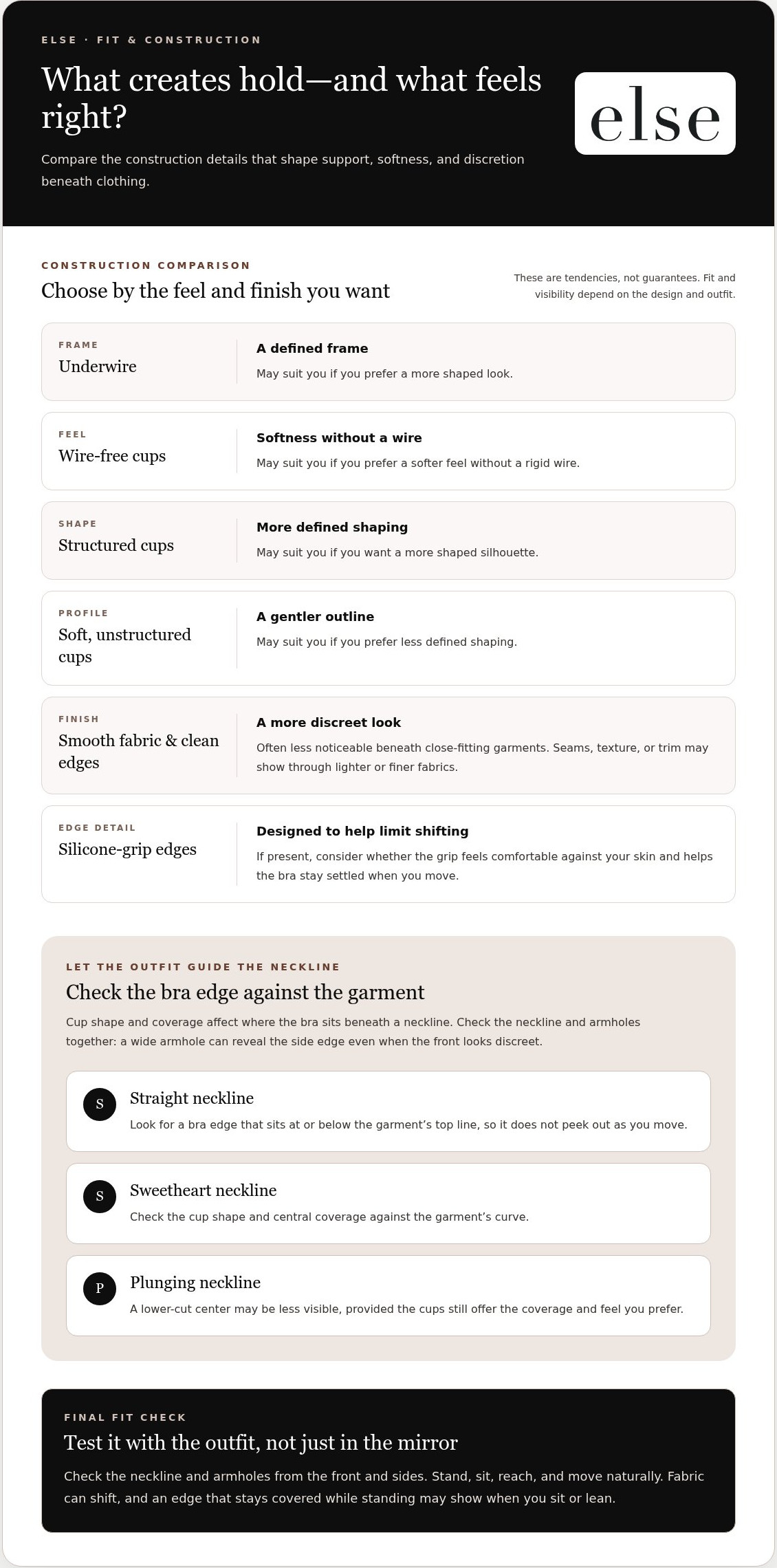
Underwire can provide a defined frame, while wire-free designs avoid a rigid wire and may feel softer. Neither is automatically more supportive or comfortable for everyone. Structured cups can create a more shaped profile; soft, unstructured cups tend to offer a gentler outline with less defined shaping. If a design has silicone-grip edges, consider whether they feel comfortable against your skin and help the bra stay settled when you move.
Cup shape and coverage matter just as much. A higher cup may show beneath a lower neckline, while a lower or more open shape may suit that garment better. When trying a bra, look at where the cup edge meets your clothing, not only how the bra looks on its own.
How do fabric and finish affect the look under clothing?
Smooth fabrics and clean edges are often less noticeable beneath close-fitting garments. Textured materials, seams, or trim may show through lighter or finer fabrics. Coverage also changes the visible line: a fuller cup can extend higher at the neckline, while a lower-cut shape may be easier to conceal beneath an open front. Try the bra with the actual garment and check the neckline and armholes from different angles.
Use this comparison to narrow your priorities. These are tendencies, not guarantees. Fit and visibility depend on the specific design and outfit.
| Construction detail | May suit you if you prioritize |
|---|---|
| Underwire | A defined frame and shaped look |
| Wire-free cups | A softer feel without a wire |
| Structured cups | A more shaped silhouette |
| Soft, unstructured cups | A gentler, less defined profile |
| Smooth finish | A discreet look beneath fitted clothing |
| Silicone-grip edges, when present | An edge designed to help limit shifting |
As you compare details, explore ELSE bras as part of your search for lingerie that balances thoughtful design with practical comfort.
Which Strapless Bra Style Works With Your Outfit?
Let the garment guide your choice. A strapless bra that works beneath a straight-neck evening dress may show above a plunging top, while a low-cut style may offer less coverage than you want under a simple bandeau dress. Check the neckline and armholes together. A wide armhole can reveal more of the bra’s side edge, even when the front looks discreet.
How do necklines change which strapless bra to choose?
A straight neckline usually calls for a bra edge that sits at or below the garment’s top line, so it doesn’t peek out as you move. A sweetheart neckline curves lower at the center, making the cup shape and central coverage worth checking. For a plunging neckline, a lower-cut center may be less visible, provided the cups still give you the coverage and feel you prefer.
Try the bra with the outfit and check the look from the front and sides. Stand, sit, reach, and move naturally. Fabric can shift, and a neckline that seems covered while standing may reveal an edge when you sit or lean.
Should you choose a bandeau or a more structured strapless style?
A bandeau has a simple, continuous silhouette that can work beneath garments with a straight, uninterrupted neckline, especially when you want a smooth, minimal outline. Its shape and coverage may feel different from a style with formed cups or more internal structure. Depending on its design, a structured option can create a more defined shape or offer a different level of coverage.
Choose based on what the outfit calls for and what feels comfortable on your body, rather than following a blanket rule about cup size or occasion. For evening wear, consider the neckline, fabric, and amount of shaping you want. For everyday layering, think about whether the bra’s edge will remain discreet beneath your usual tops and whether it feels comfortable for longer wear.
Use this quick outfit check:
- Straight or strapless neckline: Look for a top edge that stays concealed along the garment’s line.
- Sweetheart neckline: Check that the cup shape follows the curve without showing at the center or sides.
- Plunging neckline: Compare center coverage with the depth of the opening.
- Wide or low armholes: Check the side edge as carefully as the front.
The best match is the one that stays unobtrusive through ordinary movement while giving you the coverage and shape you want. A final try-on with the complete outfit can reveal details that a mirror check in underwear alone won’t.
How to Check Strapless Bra Fit and Prevent Common Discomfort
A brief try-on can show whether a strapless bra feels settled before you wear it out. Check the band, cups, and edges on your body, then repeat the check with the outfit you plan to wear. Size labels are a starting point, not a guarantee of fit. Designs and sizing can vary, so use current measurements alongside the brand’s size guidance.
What is the easiest at-home strapless fit check?
Start with the band sitting level around your body. It should feel secure without pinching, and it shouldn’t ride up when you move. Then check that the cups contain breast tissue smoothly, without obvious gaps or edges cutting in. Put on your planned outfit and look for visible bra edges at the neckline and armholes.
- Raise your arms and notice whether the band shifts or the cups move out of place.
- Sit, stand, and gently twist to check for pinching, slipping, or pressure that becomes uncomfortable.
- Take a full, easy breath, then view the bra beneath your outfit from the front and sides.
For a more informed size starting point, measure around your ribcage and the fullest part of your bust with a flexible tape held level. Compare those measurements with the brand’s sizing guidance, then check the fit on your body. Numbers and labels can’t account for every design or individual shape.
What can slipping, digging, or gaping tell you?
Treat discomfort as a clue to investigate, not something to endure. If the band slips or rides up, check that it’s positioned level and consider whether it feels secure enough. If the cups gape, their size or shape may not suit your breast shape or the bra’s cut. If they dig in, the cups may be too small or shaped in a way that doesn’t sit comfortably. A band that looks uneven may need repositioning, or the overall fit may not be right for you.
Make one adjustment at a time, then repeat your movement check. If the same issue persists, try a different size or design rather than relying on repeated tugging throughout the evening. For a related comparison of fit and support, read our wireless bra fit and support guide.
Once you know what feels comfortable and stays composed beneath your outfit, explore ELSE bras as you consider your next fit.
Choose a Strapless Bra That Feels Considered, Not Compromised
A considered choice brings the practical details together: how the bra fits, where its edge sits beneath your outfit, the coverage you want, and how it feels over the length of wear. No single construction suits every body or wardrobe. The aim is to find a balance that lets you dress with ease, rather than spend the evening adjusting or thinking about what you’re wearing underneath.
What should your final strapless-bra checklist include?
Before settling on a style, use these points to decide whether it feels right for you:
- Fit: The band should remain level and secure without restricting comfortable movement.
- Neckline: Check that the bra’s edge sits discreetly beneath the outfit you plan to wear.
- Coverage: Make sure the cups give the amount of coverage and shape you prefer.
- Comfort: Notice how the fabric and construction feel against your skin, including after moving and sitting.
- Frequency: Consider whether you need a piece for a particular outfit or one that fits into regular rotation.
These priorities can involve trade-offs. More structure may create a more defined shape, while a softer construction may feel less shaped. Greater coverage can feel reassuring, but a lower or more open neckline may call for a less visible cup edge. Try options with clothes you actually wear, then decide which balance feels most natural.
How can a strapless bra fit into a considered lingerie wardrobe?
A strapless style can work with outfits that leave the shoulders bare. A wireless bra may suit days when you prefer a different feel or construction. Neither needs to replace the other. A thoughtful wardrobe makes room for different clothing and comfort preferences, with each piece chosen for how it works in your life.
ELSE brings a contemporary design perspective to lingerie, balancing refined aesthetics with everyday ease. As you search, look for bras that feel considered in both appearance and wear, rather than choosing only by a label or occasion. The right choice is personal and should feel at home in your wardrobe.
Ready to explore bras with intention? Discover ELSE’s bra assortment and consider which pieces suit your style, clothing, and preferred feel.
Choose with Confidence and Dress with Ease
A well-chosen strapless bra starts with a secure, comfortable fit, then takes its cues from your outfit. Check that the band stays level, the cups sit smoothly, and the edges remain discreet beneath your neckline as you move. Then weigh the shape and coverage you prefer against the feel of the construction. A considered choice should support your plans without asking you to compromise on comfort.
ELSE is a contemporary lingerie brand with an online collection of bras and intimate apparel. Exploring different bra styles can help you find pieces that feel at home in everyday dressing and special moments.
Explore ELSE bras and choose with intention, keeping your wardrobe, preferred feel, and the clothes you love in mind. The right fit can make getting dressed feel a little more effortless.
Frequently Asked Questions
Is a strapless bra supposed to feel tight?
A strapless bra should feel secure, not painfully tight or restrictive. Its band needs to stay level and supportive while allowing comfortable breathing and movement. The cups should contain breast tissue without gaping or digging in. Try it with the outfit you plan to wear, then raise your arms, sit, and move naturally. If it keeps slipping, pinches, or makes movement uncomfortable, the fit or shape may not be right for you.
How do you keep a strapless bra from slipping down?
Start by checking that the band sits level and feels secure around your body, since it provides much of a strapless design’s support. Put the bra on with your intended outfit, then raise your arms, sit, and move gently to see whether it shifts. If it continues to slip, reassess the band and cup fit, as well as how the bra is positioned. Repeatedly pulling it back into place won’t resolve an underlying fit issue.
Can you wear a strapless bra every day?
You can wear one every day if its fit and construction feel comfortable for your body and the clothes you’re wearing. Consider how long you’ll have it on, the coverage you prefer, and whether the band stays comfortable through ordinary movement. A strapless style isn’t ideal for every outfit or preference; a bra with straps or a wireless design may feel more suitable on other days. Let comfort and wardrobe needs guide your choice.
What is the difference between a bandeau and a strapless bra?
A bandeau is generally a simple, band-shaped design, while a strapless bra may have more defined cups or internal structure. The amount of shaping, coverage, and support varies by design, so the names alone don’t tell you exactly how either will fit. Consider your outfit’s neckline and how much structure you prefer. Try the style beneath your clothing and check that it feels comfortable and stays discreet as you move.
How should a strapless bra fit around the band and cups?
The band should sit level around your body and feel secure without painful pressure. Cups should contain breast tissue smoothly, without obvious gaping or edges cutting in. Check the fit while standing and moving, then see how it looks beneath your intended outfit. Size labels can vary between designs, so assess how the bra actually feels and sits rather than relying on the label alone. Comfortable movement is part of a good fit.
Can you wear a strapless bra under a plunging neckline?
Yes, if the bra’s cup shape and upper edge sit discreetly beneath the neckline while giving you the coverage you want. Compare the garment and bra together in natural light, then check the look while standing, sitting, and moving. If the bra edge shows or the cups feel too exposed, another cut or neckline pairing may work better. The fit should feel comfortable as well as visually unobtrusive.
How do you know when a strapless bra is the wrong size?
A band that rides up, repeated slipping, painful pressure, gaping cups, or edges that cut into breast tissue can signal a fit mismatch. These clues may relate to the band, cup shape, or overall construction, so consider them together. Try the bra beneath your intended outfit and move naturally to see whether the fit changes. Since labels can vary between designs, use how it feels and sits as your guide.
