

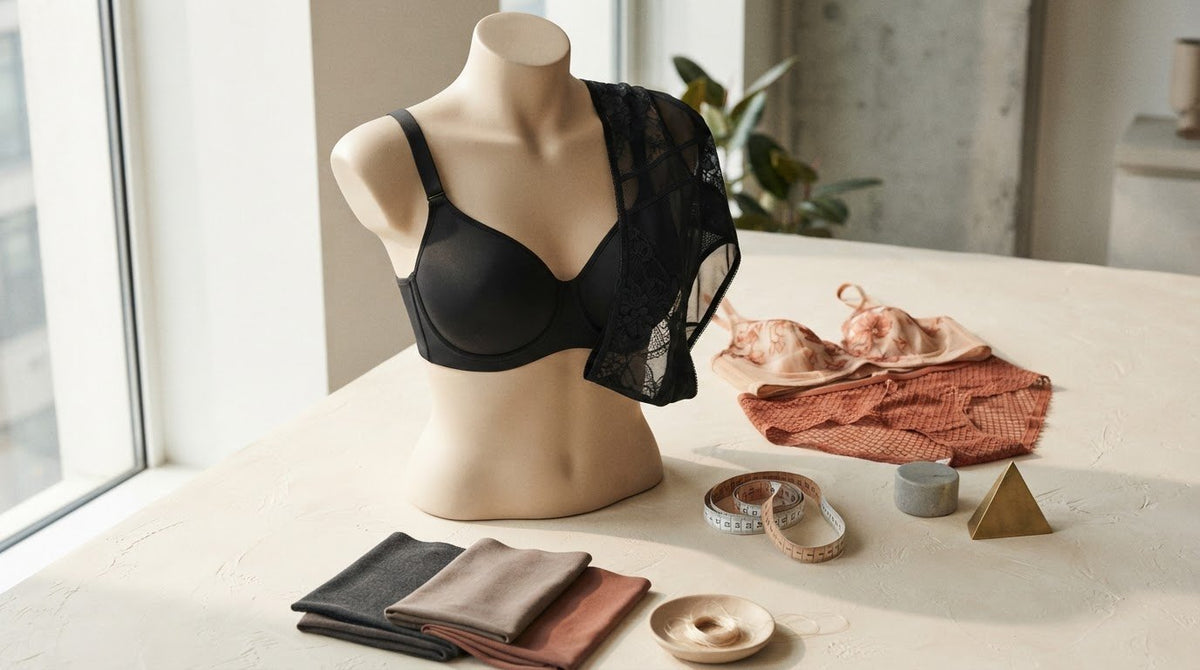
Tasarım Lingerie Setleri: 2026’da Uyum, Stil ve Kombinleme Rehberi
The most considered designer lingerie sets don’t begin with a perfect match. They begin with pieces that feel right on their own. A bra can be beautiful and still miss the support or coverage you prefer, while coordinating underwear may look appealing but feel less comfortable through the day. Let fit lead the decision.
If you’re unsure which silhouettes suit you, or how to pair separates that aren’t presented as a set, compare the shape, coverage, and feel you want from each piece. ELSE’s sheer Bare styles, fishnet-inspired lace Cosmo styles, and floral-patterned Zinnia styles offer distinct visual directions to consider. Check each product listing rather than assuming a bra has a matching bottom.
This guide will help you choose bras and underwear around your fit preferences, assess design details with comfort and support in mind, and bring separate pieces together with intention. We’ll look at silhouettes, fabric, and finish, then cover practical ways to coordinate color and texture for a lingerie look that feels considered, not overly matched.
Key Takeaways
- Build designer lingerie sets from pieces that suit you individually; coordination doesn’t depend on a perfect match.
- Compare bra silhouettes by construction, coverage, adjustability, and intended wear instead of choosing by appearance alone.
- Check bra and underwear sizing separately, then choose coverage that feels comfortable for your preferences.
- Coordinate separates through thoughtful choices in color, texture, and silhouette, without assuming matching pieces are available.
- Explore ELSE bras and underwear as individual options, and confirm current product details and sizes before choosing.
What Makes Designer Lingerie Sets Feel Considered, Not Complicated?
A considered lingerie set is a bra and underwear chosen to work well individually and feel visually connected when worn together. That connection might come from a shared color, a similar lace motif, or a deliberate contrast in texture. The pieces may be sold separately, so “set” can describe a coordinated look rather than a packaged bundle.
That distinction makes choosing designer lingerie sets more flexible. Start with what each piece needs to do: the bra’s support and coverage, the underwear’s fit and feel, and the design details that bring them together. Sheer fabric can create a light, understated look, while patterned lace makes a more noticeable focal point. The term designer lingerie covers a broad category, but a thoughtful pairing can stay simple: pieces that suit your preferences, with a shared detail to make the look cohesive.
ELSE’s bras and underwear offer different visual cues, including the sheer appearance of Bare styles, fishnet-inspired lace in Cosmo styles, and floral patterns in Zinnia styles. These details can help you decide what kind of texture or pattern you want to pair. Check individual product listings rather than assuming that a matching bra and bottom are available.
What should a coordinated lingerie set include?
Start with a bra and a pair of underwear that each suit your fit preferences. A shared color, related lace pattern, or similar sheer texture can connect the pieces without making them identical. Accessories aren’t necessary; keep the focus on the foundation pieces. If matching styles are available, pair them. Otherwise, create a subtler link through one shared detail, such as color or pattern.
Why start with comfort and fit?
Comfort depends on details such as how the band feels, how much cup coverage you prefer, whether the straps sit comfortably, and how the fabric feels against your skin. Consider the intended wear, too: a bra for a particular outfit may have different neckline or strap requirements from one you want for everyday wear. For more guidance on choosing a shape, consult the published guide to bra fit, form, and everyday comfort.
Starting with fit keeps design in the conversation without letting appearance make the decision for you. Once you know what feels comfortable, color and detail can become a more personal finishing touch.
How to Compare Designer Lingerie Sets by Fit, Support, and Coverage
Refined design doesn’t guarantee your preferred support or fit. Before choosing a color or lace pattern, consider the bra’s construction, how much coverage you want, whether the straps can be adjusted, and what you plan to wear it with. A style that works with one outfit or occasion may not suit everyday wear.
Use silhouette as a starting point, not a promise about performance. The feel of a bra depends on its construction and how it fits you, so check the current size guidance and product details before deciding. When trying a style, notice whether the band feels secure without pinching, the cups contain your breast tissue without gaping or spilling, and the straps stay in place without digging in. These are useful fit checks, but the product’s own guidance and your comfort should guide the final choice.
Which bra silhouette suits your preferred support?
Compare silhouettes by their construction and shape, then assess the individual product. An underwire full-cup style may appeal if you prefer more coverage. A strapless silhouette is worth considering with strap-free outfits, provided the fit feels secure. A soft plunge creates a lower neckline, while an underwire-free bralette has no wire in its construction. No silhouette guarantees a particular level of support for every wearer.
| Silhouette | Consider it for | Check before choosing |
|---|---|---|
| Underwire | A structured shape; full-cup versions offer more coverage | Wire placement, cup coverage, and band feel |
| Strapless | Outfits with uncovered shoulders | Whether the fit feels secure without straps |
| Plunge | A lower neckline | Neckline depth and the support of the specific design |
| Underwire-free | A soft-cup construction without wire | Coverage, fabric, and the support you prefer |
For another fit reference, review the National Breast Cancer Foundation’s guidance on common fit mistakes. Revisit sizing whenever you choose a different silhouette or product. Don’t assume the same size will feel identical across designs.
How do you choose underwear coverage?
Briefs generally provide more seat coverage, bikini briefs offer a more moderate cut, and thongs provide less. These are broad distinctions, not guarantees about a particular garment. Waist height, leg openings, and fabric can change how a style feels and sits. Check the product description for the actual cut and coverage, especially if waistband placement or seat coverage matters to you.
Choose underwear separately from your bra. A coordinated look can come from shared color or texture, while each piece meets its own fit and coverage needs. Once you know which details matter most, explore ELSE’s bras and underwear and check the current product information for each piece.
Which ELSE Lingerie Styles Can You Coordinate into a Set?
ELSE’s bras and underwear offer several distinct design directions to explore as separates. Sheer fabric and wide-band details give Bare styles a pared-back look, while Cosmo’s fishnet-inspired lace brings a more graphic texture. Zinnia adds a floral pattern, with confirmed options in Iris and Black. These differences give you details to build around without treating the pieces as a packaged set or assuming matching styles are currently available.
How do Bare, Cosmo, and Zinnia differ in appearance?
Bare styles keep the focus on sheerness and clean lines. The Bare Soft Plunge Bra offers a plunge silhouette; the range also includes strapless and full-cup options, with wide-band details. Cosmo’s fishnet-inspired lace creates a more pronounced pattern across styles that include strapless and longline bras, a sporty bralette, and a thong. Zinnia’s floral pattern has a different, more decorative character. The Zinnia Underwire Full Cup Bra and Zinnia Bikini Brief are examples of separate pieces to consider.
How can you create a cohesive look from separates?
Choose the bra and underwear independently, beginning with the fit, neckline, and coverage you prefer. Then look for a visual thread, such as a shared colorway listed for both pieces, a related pattern, or a deliberate contrast in texture. You might use the floral appearance of Zinnia pieces or the sheerness of Bare styles as a starting point, while selecting each garment for its own silhouette and comfort.
Product details can change, so check current descriptions, sizes, and color options before settling on a pairing. Don’t assume a bra and bottom are available in matching shades or sizes simply because they share a style name. This approach keeps designer lingerie sets personal: the pieces can feel connected without compromising the fit or coverage you want from either one.
How to Shop for Designer Lingerie Sets Without Common Fit Mistakes
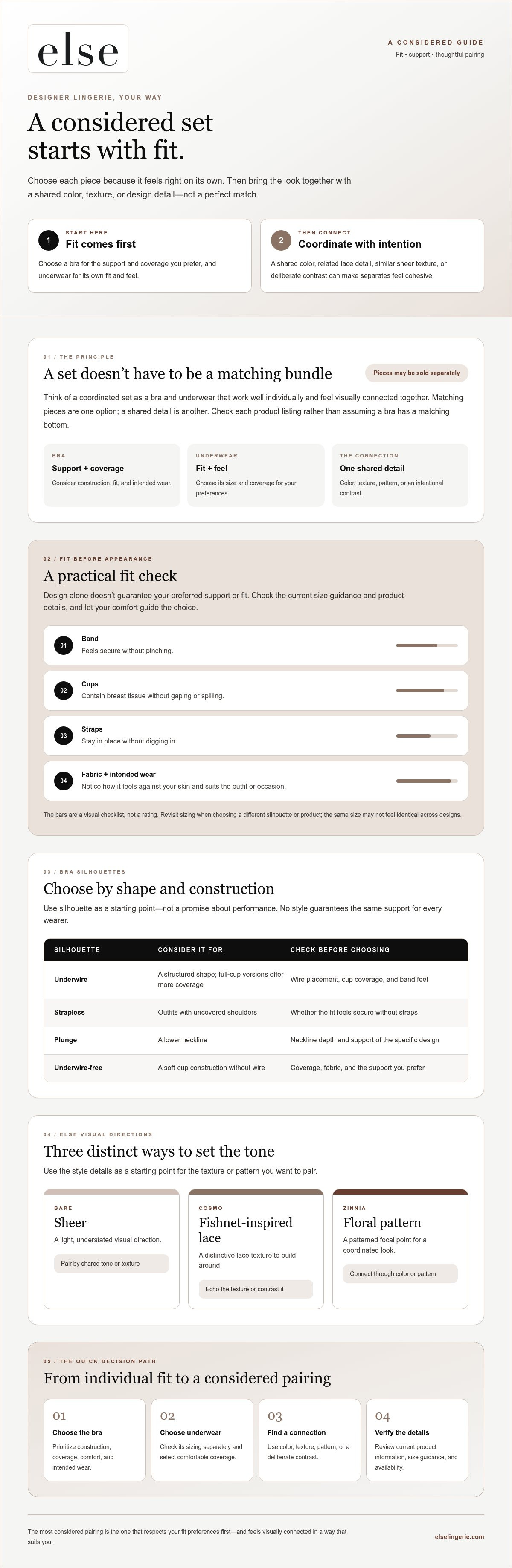
A clear decision sequence helps keep a beautiful design from distracting you from fit. Before choosing pieces for designer lingerie sets, decide how and when you want to wear them. Then choose the bra shape, check its size guidance, and select underwear coverage separately. This keeps comfort and intended use at the center of the choice.
- Identify the intended use. Consider the neckline, straps, and clothing you plan to wear over the bra.
- Choose a bra silhouette. Narrow your options by construction, coverage, and strap preference.
- Confirm the size. Review that product’s current size range and fit notes instead of relying on a familiar size alone.
- Select underwear coverage. Decide what cut and waistband placement feel right for your preferences.
Check bra and underwear sizing independently. Their size labels and fit guidance may differ, and a preferred bra size doesn’t establish which bottom will feel comfortable. Treat each product as its own decision, then consider whether the pieces work together visually.
What should you check before choosing a bra?
Read the current product details for available sizes and fit guidance. Then consider how underwire, strap configuration, neckline, and coverage relate to the outfits you have in mind. A strapless shape may suit a strap-free neckline, while a plunge silhouette may work better with a lower neckline. These are styling considerations, not promises about fit or support. Assess the specific design and your own preferences.
How can you avoid choosing a set by appearance alone?
Look beyond color or lace pattern. Compare the construction and fabric details provided for each piece, then decide whether the bra’s neckline and the underwear’s coverage and waistband placement suit the occasions you have in mind. A pairing can look cohesive and still feel wrong if either piece doesn’t match your comfort preferences.
Before ordering, revisit each product page to confirm current size availability and details, read its care information, and check the seller’s return terms. Availability and policies can change, so verify them instead of assuming a particular size or return option will apply. To compare individual styles, browse ELSE’s lingerie and underwear and use each product’s current information to guide your choice.
Find Your Designer Lingerie Set in the ELSE Shop All Collection
A thoughtful choice follows a simple order: consider fit and support first, decide on coverage next, then compare design details and color. This keeps the search for designer lingerie sets grounded in how each piece feels and functions, while leaving room for a coordinated look that reflects your taste.
ELSE’s bras and underwear can be explored as individual pieces. You might begin with a strapless, plunge, full-cup, or bralette silhouette, then narrow your underwear options by the coverage and waistband placement you prefer. From there, consider color, sheer fabric, lace, or pattern as details that can bring the pieces together. Matching is optional, and bras and bottoms may need to be selected separately.
How can you narrow the collection to your preferences?
Start with the bra structure that feels most suited to your wardrobe and preferred coverage. Next, choose an underwear cut based on how you want it to sit and feel. Only then compare color or pattern. This sequence makes it easier to weigh design without letting a striking detail outweigh comfort. Before settling on a pairing, check the current size options and product descriptions for each item.
What should you do before completing your selection?
Read each product page on its own. Review current descriptions, sizing, and care guidance, then confirm that both pieces meet your fit and comfort preferences independently. A shared color or visual detail can create cohesion, but it doesn’t confirm that styles are available together or in the sizes you need.
For a considered pairing, let your preferred fit lead and use design as the finishing touch. Browse the ELSE Shop All collection to compare current bra and underwear options at your own pace.
Choose Pieces That Feel Like Your Own
The most satisfying designer lingerie sets start with pieces that feel right individually. Let fit and support guide your bra choice, decide on underwear coverage that suits you, then bring the look together through details such as color, sheer fabric, lace, or pattern. A coordinated pairing doesn’t need to be a packaged set, and the pieces don’t have to match exactly.
Founded in 2008, ELSE creates lingerie at its own dedicated atelier. Its bras and underwear include sheer, fishnet-inspired lace, and floral-patterned styles, offering different visual directions to consider. Check each item’s current size guidance and product details, and choose the bra and bottom separately according to your preferences.
When you’re ready to compare individual pieces, explore the ELSE Shop All collection. Check the current product details and choose the bra and underwear that feel right for you.
Frequently Asked Questions
What is included in a designer lingerie set?
A designer lingerie set usually means a bra and underwear chosen to look coordinated, though the pieces may be sold separately rather than as a packaged bundle. They might share a color, lace pattern, or fabric appearance. Accessories aren’t essential. Check each product listing to confirm exactly what’s included, and treat the bra and bottom as individual choices for fit, size, and coverage.
How do I choose a designer lingerie set that fits well?
Choose the bra and underwear for fit first, then coordinate their design. Consider how the band feels, the cup coverage and strap style you prefer, and the underwear’s cut and waistband placement. Check the current size guidance for each item, since sizing can vary by product and bra and underwear sizes don’t have to correspond. The best designer lingerie sets are the ones that feel comfortable on you, not just visually matched.
Are designer lingerie sets sold as matching pieces?
Some lingerie is offered in matching styles, but the word “set” doesn’t guarantee a bundle or that coordinating pieces are available in the sizes you need. A coordinated look can also be built from separates that share a color or design detail. Read the individual product pages to confirm what’s sold, which sizes are currently listed, and whether the pieces you’re considering work together visually.
What is the difference between an underwire bra and a bralette?
An underwire bra has a wire along the lower edge of the cups, while a bralette is generally a softer, less structured style and often has no underwire. Construction varies, so the name alone doesn’t tell you exactly how much support or coverage a particular bra will provide. Check the product description for details, then consider its shape, straps, and fit in relation to your preferences.
How do I choose lingerie underwear coverage?
Start with how much coverage and what waistband position feel comfortable to you. Briefs generally offer more seat coverage, bikini briefs a more moderate cut, and thongs less coverage, though the exact shape depends on the product. Read the description for details about the rise and cut rather than relying on the style name alone. Your preferred coverage may also differ depending on the occasion or outfit.
Can I mix different lingerie styles to create a coordinated look?
Yes. Separate pieces can feel considered together through a shared color, a related pattern, or a deliberate contrast in texture. For example, a simple bra can pair visually with patterned underwear if that balance suits your taste. Choose each item for its own fit and coverage first, then check current product details and size options before assuming the pieces are available to coordinate.
How should I care for designer lingerie?
Follow the care instructions on each garment’s label or product page, since delicate fabrics and construction can have different needs. If machine washing is permitted, a lingerie bag can help protect the item. Air-drying is a gentle way to help preserve shape and elasticity. Avoid assuming every bra or underwear style can be cared for the same way; check the specific guidance before washing.
