

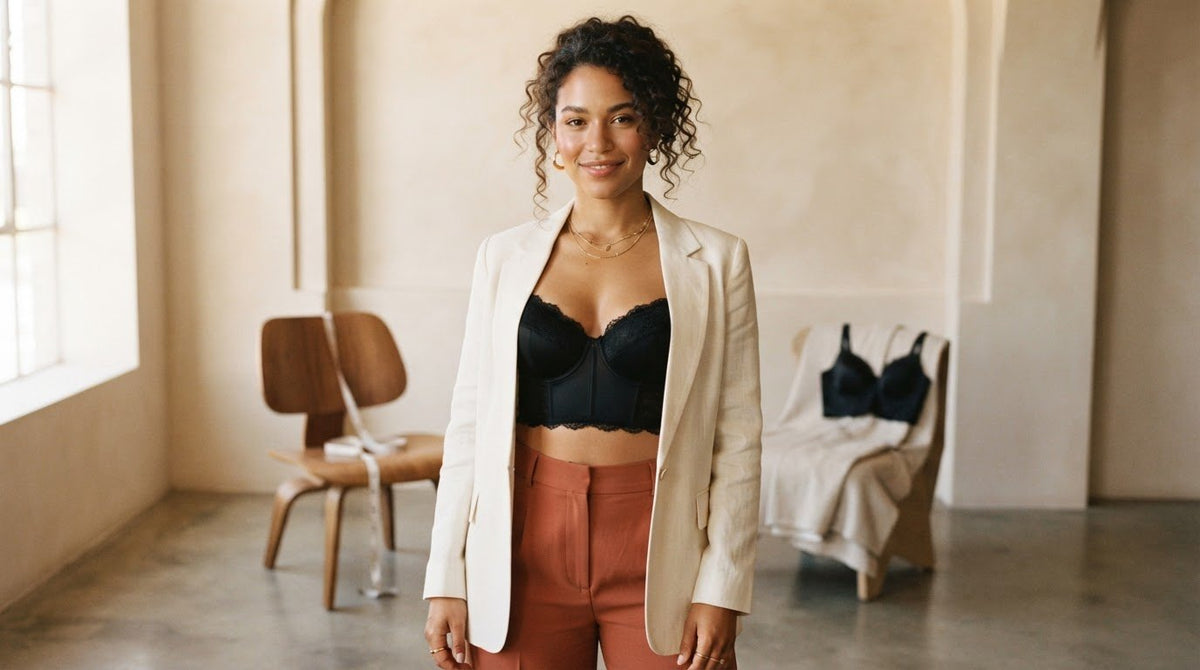
Longline Bra: How to Choose the Right Fit and Style
A longline bra extends below the cups, creating a more defined silhouette than a standard bra. But the extra length can raise practical questions: will the band feel comfortable, and will it show beneath your clothes? The answers depend on the cut, fabric, fit, and how you plan to wear it.
If you’re unsure whether you’re looking at a longline bra, a standard bra, or a bodysuit, this guide explains how to tell the difference and what to consider when choosing. You’ll learn how to assess the band and cups, compare coverage, and check how the extended band works with fitted clothing or high-waisted pieces. With a clearer sense of the style’s shape and feel, you can decide whether it suits your wardrobe.
Key Takeaways
- Look for the defining extended band to distinguish a longline bra from a standard bra.
- Assess the cups and band separately. The band should feel secure without pinching, riding up, or limiting comfortable movement.
- Compare coverage and fastening to decide whether a bra or bodysuit better suits your outfit.
- Start with your outfit and desired coverage, then consider construction, fit, and whether you want the band visible or discreet.
- Use fit and styling needs to guide your next step, and explore ELSE’s bra and bodysuit categories without assuming a specific longline style is available.
What Is a Longline Bra? Understanding the Extended Silhouette
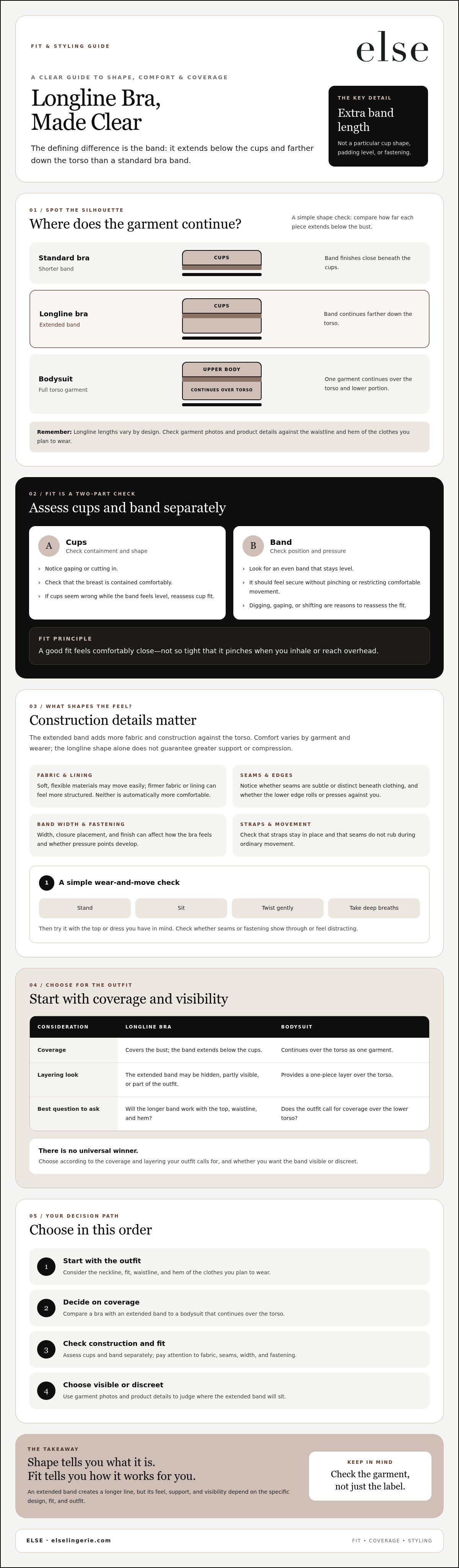
A longline bra has a band that extends farther down the torso than a standard bra band. Rather than ending just beneath the cups, it continues over more of the rib cage, creating a longer line across the upper body. The defining feature is the extra band length, not a particular cup shape, padding level, or fastening.
The silhouette may be subtle beneath clothing or become part of an outfit with high-waisted pieces or an open layer. A reference guide to long-line bra describes the style as extending toward the waist. Actual lengths vary by design, so the label alone won’t tell you exactly where the band will sit. Check the garment’s photos and product details against the waistline and hem of the clothes you plan to wear.
How Is a Longline Bra Different from a Regular Bra?
Standard bra: The band typically forms a shorter line around the rib cage and finishes close beneath the cups. Longline bra: The band continues farther down the torso, making more of the garment visible below the bust.
Imagine wearing the same outfit with each silhouette. The shorter band may sit discreetly under a top, while the longer one may create a visible horizontal line or extend closer to the waist. That visual difference doesn’t determine the cup design. Either style may have different cup shapes and construction, and the garment’s support depends on its specific design and fit.
What Does the Extended Band Change?
A longer band creates a more continuous panel below the cups. Depending on the cut and the clothes worn over it, that panel may be visible, partly visible, or hidden. The extra material can also make the bra feel like a more substantial layer, although the sensation varies by garment and wearer.
Comfort depends on details such as fabric softness and stretch, seam placement, band width, fastening, and fit. Some designs may feel flexible and light; others may feel more structured. An extended band doesn’t automatically mean greater support or compression, so assess each bra on its own rather than relying on the silhouette’s name.
How Longline Bra Construction Affects Fit, Comfort, and Feel
The extended band puts more fabric and construction against the torso, so comfort depends on more than the size on the label. A longline bra should feel secure without pinching, shifting upward, or making it difficult to breathe or move comfortably. Sizing charts and construction vary by brand, so use the guidance for the specific garment instead of assuming your usual size will fit every design the same way.
Check the cups and band separately. If the cups gape, cut in, or don’t contain the breast comfortably while the band feels level, the cup fit may need reassessing. If the cups seem right but the band digs in or moves around, look at the band fit. When one part fits and another doesn’t, the overall garment can still feel wrong.
How Should a Longline Bra Fit Around the Band?
Look for a band that sits evenly around your torso rather than tilting or creeping upward as you move. It should feel comfortably close, not so tight that it pinches when you inhale or reach overhead. Persistent digging, gaping away from the body, or shifting during ordinary movement are reasons to reassess the fit. If the cups and band seem to need different adjustments, compare nearby sizes using the brand’s size chart and fitting guidance.
Which Details Influence Comfort?
Fabric and construction shape how a bra feels against your skin. Soft, flexible material may move easily with the body, while firmer fabric or lining can feel more structured. Neither is automatically more comfortable. Seams may be barely noticeable or distinct beneath clothing, and closures can create pressure points depending on their placement. Because the extended band adds material against the torso, pay attention to its edge and finish as well.
Try the garment through a few ordinary movements. Stand, sit, twist gently, and take a few deep breaths. Notice whether the straps stay in place, seams rub, or the lower edge rolls or presses against you. Then wear it with the top or dress you have in mind. The outer layer can show whether a seam or fastening is visible or distracting. For broader fit comparisons, explore ELSE’s bras and bodysuits.
Longline Bra vs. Bodysuit: Which Layer Suits Your Outfit?
Both pieces can create a considered line beneath clothing or become part of a visible outfit, but they cover the body differently. A longline bra is still a bra: its extended band reaches farther down the torso, while the garment ends above the waist or lower torso. A bodysuit continues over the torso as one garment, including the upper body and lower portion. Neither is universally better. The right option depends on the coverage and layering your outfit calls for.
| Consideration | Longline bra | Bodysuit |
|---|---|---|
| Coverage | Covers the bust, with a band extending below the cups. | Extends over the torso; the exact coverage depends on the design. |
| Fastening | May close at the back, front, or another point depending on construction. | Fastening varies; some designs have a closure at the lower body. |
| Layering | Works beneath clothing or as a visible layer when its hem suits the outfit. | Can be worn beneath other pieces or styled as a top, depending on its cut. |
| Outfit use | Consider it when you want bust coverage and a longer band as part of the silhouette. | Consider it when you want one piece to cover both the bust and torso. |
When Does a Longline Bra Make More Sense?
Choose this silhouette when you want the extended band to be part of the look, perhaps visible above high-waisted trousers or beneath an open shirt. Before deciding, check the actual hem, coverage, and fastening. Those details determine where the bra sits and whether it shows under a particular top. Delicate fabrics and close-fitting necklines may reveal edges more readily, so consider the full outfit rather than assuming the shape suits every layer.
When Might a Bodysuit Be the Better Layer?
A bodysuit provides more continuous torso coverage, which may suit a tucked-in shirt or fitted skirt when you prefer a single layer extending below the waist. Its lower portion and fastening can affect how it feels beneath close-fitting clothes, so consider the complete garment, not just the neckline. If you want bust coverage with an extended band and no additional torso coverage, a bra may be the simpler layer.
ELSE offers both bras and bodysuits, so you can compare these categories as you consider coverage and outfit needs. Check each garment’s specific cut and construction; availability of a particular longline style isn’t confirmed.
How to Choose a Longline Bra for Your Wardrobe
Start with the clothes you want to wear, then consider the garment itself. A thoughtful choice balances the intended silhouette with how the bra feels in motion. Appearance and the label alone won’t tell you whether it will work for your needs.
A Simple Longline Bra Selection Checklist
- 1. Begin with the outfit. Identify the top, dress, or other layer you have in mind. Note its neckline, fabric, and fit, since these affect which edges or seams might show.
- 2. Decide on coverage. Consider how far you want the band to extend and whether you want it hidden, subtly visible, or intentionally part of the look. Compare the garment’s actual hem with where your clothes sit.
- 3. Review the construction. Check the product details for materials, lining, seams, straps, and closure. These elements affect feel and appearance, so consider how they’ll work with the fabric and cut of your outfit.
- 4. Check the size guidance. Use the brand’s specific size chart rather than assuming sizing is consistent across labels. If available, review fit notes alongside the measurements and garment details.
- 5. Read care instructions. Check how the piece should be cared for before purchasing, especially if its fabric or construction calls for particular handling.
How to Tell Whether the Fit Works for You
Try the bra on with the intended outer layer, then assess each part separately. The band should stay in place without painful pressure or uncomfortable restriction. Check that the cups provide the coverage you want and that the straps rest comfortably. A concern in one area doesn’t necessarily mean the whole garment is the wrong size.
Move through ordinary positions: stand, sit, reach, and take a comfortable breath. Notice whether the band shifts, the lower edge rolls, or a closure or seam presses against you. A mirror can show the silhouette, but movement reveals how the construction feels during wear.
If the garment digs in, gaps, or keeps shifting, revisit the fit and the product’s sizing guidance. Trying a nearby size may help if the band and cups feel mismatched. If the same discomfort remains, the cut or construction may not suit your body or outfit. For a broader look at available categories, explore ELSE bras and bodysuits.
Explore Bras and Bodysuits with a Clearer Sense of Fit
Choosing a longline bra comes down to how its band, cups, and construction feel on your body, and whether its coverage suits the clothes you plan to wear. The extended silhouette describes band length, not a guaranteed level of support or shaping. Use the garment’s details and your own fit assessment to decide whether it belongs in your wardrobe.
What to Keep in Mind Before You Choose
Consider comfort in motion as well as appearance. A piece that looks smooth while standing still may feel different when you sit, reach, or move through the day. The band should feel secure without painful pressure or restriction, and the cups and straps should feel comfortable in their own right. If the garment shifts or digs in, revisit the size guidance and consider whether its construction suits you.
Keep the distinction between the two silhouettes simple: a bra covers the bust, while a bodysuit extends over the torso. Choose based on whether you want a separate undergarment with a longer band or more continuous torso coverage beneath, or as part of, an outfit.
Continue Exploring ELSE’s Lingerie
ELSE offers bras and bodysuits, two categories to consider as you refine what you want from a layer. Compare each garment’s coverage, construction, and fit notes with your wardrobe needs. A category label alone won’t guarantee a particular cut or feel. Check the individual product details for available styles and brand-specific sizing guidance.
For a closer look at ELSE’s offerings, Explore ELSE. Review the product information and fit recommendations for each piece, since construction and sizing guidance can differ between styles.
Choose the Layer That Feels Right for You
A longline bra is defined by its extended band, but the label alone can’t tell you how supportive or comfortable it will feel. Consider the specific construction, check the cup and band fit separately, and see how the garment moves with you. Then compare its coverage with a bodysuit, which continues over the torso, and with the outfit you have in mind.
Fit is personal. The right choice is the one that feels comfortable through ordinary movement and works with your wardrobe, whether the band is discreet or intentionally visible. Review each garment’s product details and sizing guidance before deciding. ELSE offers bras and bodysuits, and was founded in 2008 by Ela Onur. Check the available styles rather than assuming a particular longline silhouette is offered.
Explore ELSE’s bras and bodysuits to compare available layers with your style and coverage needs.
Frequently Asked Questions
What is a longline bra?
A longline bra has a band that extends farther down the torso than a standard bra band. Its exact length, cup shape, materials, and construction vary by design. “Longline” describes the silhouette, not a guaranteed level of support, shaping, or coverage. Check the garment’s product details, then consider whether its fit and shape work with your wardrobe.
Is a longline bra more supportive than a regular bra?
Not automatically. Support depends on the complete design, including cup construction, band fit, straps, materials, and your needs. A longer band changes the silhouette, but its length alone doesn’t establish how supportive a bra will feel. Review the garment’s construction and fit guidance, then assess its comfort while moving. If it digs in, shifts, or feels restrictive, reconsider the size or design.
Can you wear a longline bra every day?
That depends on its fit, materials, construction, and how comfortable it feels during your usual activities. One design may feel suitable for regular wear, while another may work better with a particular outfit or occasion. Check that the band feels secure without restricting movement and that the fabric is comfortable against your skin. Follow the garment’s care instructions.
How should a longline bra fit?
A longline bra should feel secure around your torso without painful digging, unwanted shifting, or restriction when you breathe and move. Assess cup coverage and strap comfort separately, since either can affect the overall fit. Try it with the clothes you plan to wear and consult the garment’s specific size chart. Sizing and construction vary between brands, so don’t rely on the label alone.
What is the difference between a longline bra and a bodysuit?
A longline bra is a bra with an extended band, while a bodysuit continues over the torso as one garment. This changes how much of the body each covers and how the piece layers beneath clothing. Neither is universally better. Consider your outfit and desired coverage: choose a separate bra with a longer band, or a bodysuit if you want a continuous layer over the torso.
Can a longline bra be worn under a dress?
Yes, it can work beneath some dresses, depending on the neckline, fabric, fit, and where the bra’s extended band ends. Check whether its edges or seams show through, and whether the band stays comfortable while you sit and move. The longer silhouette can also be an intentional part of a layered look. For a discreet base layer, assess the specific garment under the dress before choosing it.
