


Best Bra for Wide-Set Breasts: A Fit-First Buying Guide
The bra labeled “wide-set” isn’t automatically the best bra for wide set breasts. A low center gore or a particular cup shape may look promising, yet still feel uncomfortable or leave space where you need support. A more reliable guide is how the bra works with your breast spacing, root shape, and cup volume.
If the gore sits away from your chest, the cups gape, or tissue feels unsupported at the sides, you’re not alone. Style names and shopping filters can offer clues, but they can’t predict how a bra will fit your body. Comfort and a smooth fit depend on the details you notice once it’s on.
This guide explains how to assess those details and compare bra constructions without relying on labels alone. We’ll look at how the center gore, cup shape, and side coverage affect fit, then consider styles such as plunge and balconette bras as starting points, not rules. You’ll be better equipped to choose a bra that feels comfortable, supports you where you need it, and sits smoothly under clothes.
Key Takeaways
- Breast spacing is one part of fit; consider your breast root, volume, and shape when narrowing your options.
- Check how the band, cups, center gore, wires, and straps feel rather than relying on a style label to predict fit.
- Compare bra shapes by their construction, neckline, and coverage, then test how each sits on your body.
- Use a step-by-step try-on to assess support and comfort, changing one fit variable at a time.
- Find the best bra for wide set breasts by prioritizing your fit needs, then explore options with those details in mind.
What Does Wide-Set Breasts Mean When Choosing a Bra?
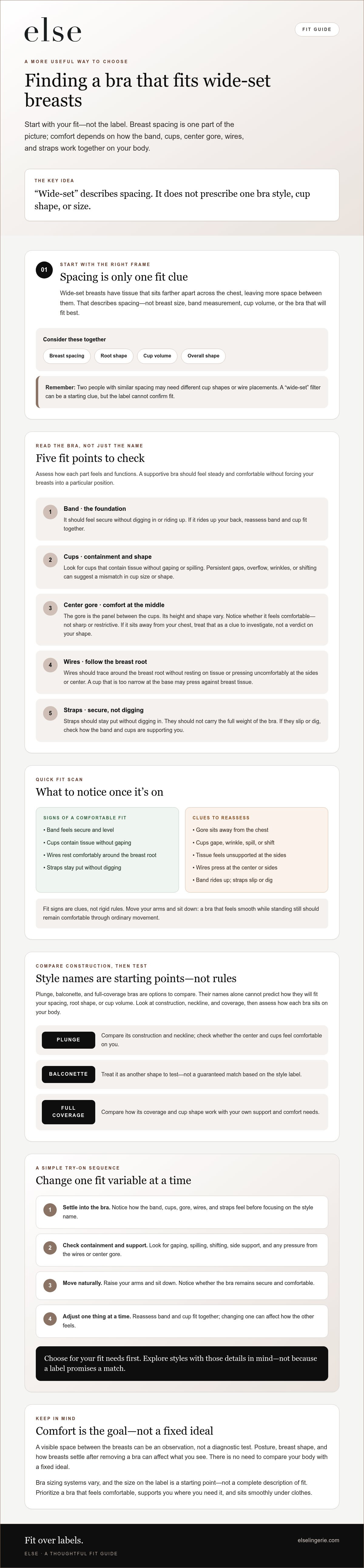
Wide-set breasts are breasts whose tissue sits farther apart across the chest, leaving more space between them. The phrase describes spacing, not breast size: it doesn’t tell you your band measurement, cup volume, or which bra will fit best. Spacing is one useful detail to consider alongside breast root, volume, and shape. It isn’t a problem to correct or a bra-size category with one ideal style.
That distinction matters when looking for the best bra for wide set breasts. Two people with similar spacing may need different cup shapes or wire placements. A product filter marked “wide-set” can be a helpful starting point, but the label alone can’t confirm how a bra will feel on your body.
How can you tell if your breasts are wide-set?
You might notice a visible space between your breasts when they’re resting naturally. Treat this as an observation, not a diagnostic test: posture, breast shape, and the way your breasts settle after removing a bra can all affect what you see. There’s no need to compare your body with a fixed ideal. How a bra fits and feels is more useful than measuring yourself against someone else’s proportions.
Why breast spacing alone cannot determine your bra size
Band fit and cup fit are separate checks. The band should feel secure without digging in or riding up, while the cups should contain your breast tissue without gaping or spilling. Bra sizing systems vary, so treat the size on the label as a starting point, not a complete description of fit. A concise overview of bra sizing systems can help explain how band and cup labels are commonly used.
Cup shape and wire placement also influence comfort and coverage. A cup that’s too narrow at the base may press against breast tissue, while a wire that extends too far toward the center or sides may feel intrusive. Look for a shape that follows your breast root and rests comfortably against your chest, rather than choosing a style based only on its name. A broader bra fit and form guide can offer more context as you assess these details.
Use spacing as one clue, then judge the bra on its actual fit. That leaves room for personal preference: you may want a particular silhouette, steady support, or simply a comfortable bra that sits smoothly through the day.
Which Fit Signs Matter Most for a Bra for Wide-Set Breasts?
A bra should feel steady and comfortable without forcing your breasts into a particular position. Check how each part works together: the band provides the foundation, the cups contain and shape tissue, the center gore and wires sit against the chest, and the straps help keep the cups in place. A useful rule of thumb: a well-fitting bra has a secure, level band, cups that contain tissue without gaping, wires that rest comfortably around the breast root, and straps that stay put without digging in.
Fit can vary by brand, style, and body shape, so use these signs to assess the bra on you rather than treating them as rigid rules. The National Breast Cancer Foundation’s Bra Fit Guide also offers practical guidance on recognizing common fit issues.
What should the center gore and wires feel like?
The center gore is the fabric panel between the cups; in a wired bra, it sits against the chest between the breasts. Its height and shape vary, so one position isn’t right for every body or bra. Notice whether it feels comfortable rather than sharp or restrictive. Wires should follow the breast root, tracing around the tissue without resting on it or pressing uncomfortably at the sides or center.
If a gore doesn’t lie flat, treat that as a clue to investigate, not a verdict on your shape. Cup volume, cup construction, and wire width can all affect how the center sits. The goal is a supportive, comfortable fit, not forcing a particular amount of closeness.
How do you spot cup or band fit issues?
Look for overflow at the cup edges, persistent gaping, or fabric that wrinkles and shifts as you move. These signs can point to a mismatch in cup size or shape. Straps should feel secure without carrying the full weight of the bra. If they dig in or repeatedly slip, check how the band and cups are supporting you before adjusting them.
A band that rides up your back may signal a fit issue, but it isn’t necessarily caused by breast spacing. Reassess the band and cup together before switching styles: a change in one can affect how the other feels. Move your arms and sit down, too. A bra that feels smooth while standing still should remain comfortable through ordinary movement.
Once you know which details matter to you, you can use them to assess available options, including the bras ELSE offers, without assuming a particular design will fit based on its label alone.
Balconette, Plunge, or Full-Coverage: How to Compare Bra Shapes
A style name offers a first impression, not a fit guarantee. Two bras described as “balconette” can differ in cup height, wire width, fabric, and how their cups position breast tissue. To find the best bra for wide set breasts, compare the actual construction and how it feels on your body instead of expecting one neckline to create a particular silhouette.
The table below is general buying guidance, not confirmation of ELSE’s current bra inventory. Use it to decide what to try, then assess each bra for comfortable containment and a stable fit.
| Shape | Typical construction | Neckline and coverage | Fit question to test |
|---|---|---|---|
| Balconette or demi | Often has more open cups, with a relatively horizontal or gently curved top edge. | Lower, open neckline; coverage is often moderate, though designs vary. | Does the cup edge lie smoothly, and do the wires sit around your breast root? |
| Plunge | Usually has a lower center gore and cups that angle toward the center. | Deep neckline; coverage depends on cup depth and shape. | Does the center feel comfortable, with tissue contained as you move? |
| Fuller coverage | Typically uses taller cups, which may have seams, stretch panels, or other shaping details. | Higher neckline and more cup coverage, depending on the design. | Does the cup contain tissue without gaping, wrinkling, or pressing at the sides? |
When might a balconette or demi shape be worth trying?
These shapes may suit you if you prefer a more open neckline and less coverage at the top of the cup. Their cut alone doesn’t promise lift or a particular fit. During a try-on, check whether the cup edge stays smooth and the wires follow your breast root without pressing into tissue. The same cut can feel different depending on breast shape, volume, and the bra’s construction.
When might a plunge or fuller-coverage shape suit your preferences?
A plunge may work with lower necklines, while a fuller-coverage cup may feel more encompassing. Neither is automatically better for breasts that sit farther apart. Coverage and containment depend on cup shape, fabric, seams, and wire placement. Try each with clothing you often wear, then check comfort and stability as you move. Let the fit guide your choice, not the label.
Think of these shapes as options to compare, not rules to follow. Designs vary between brands and individual bras, so keep the construction details in view and choose the one that feels right on your body.
How to Try On and Choose the Best Bra for Wide-Set Breasts
The best bra for wide set breasts is the one that feels secure and comfortable on your body, not simply the one with a promising label. Use the same sequence each time you try a bra, whether you’re in a fitting room or assessing an online purchase at home.
What should you check during a bra try-on?
- Settle the band. Fasten a new bra on a comfortable setting and check that the band feels secure and sits level around your body. It shouldn’t ride up or make it difficult to breathe comfortably.
- Settle your tissue into the cups. Adjust the cups gently, then look for spillage, persistent gaps, or fabric that wrinkles or shifts. The cup edge should lie smoothly without cutting into breast tissue.
- Check the wires and center. If the bra has wires, notice whether they follow your breast root without pressing into tissue. The center panel should feel comfortable for that bra’s design.
- Adjust the straps. They should stay in place without digging in. If they’re doing all the work, reassess the band and cups before tightening them further.
- Move naturally. Raise your arms, sit, and turn your body. Check whether the bra stays in place and continues to feel supportive, rather than judging the fit while standing still.
Try more than one construction if you can. To understand what makes a difference, change one variable at a time, such as cup shape or size, while keeping the rest as similar as possible.
How should you compare sizes and styles online?
Use the retailer’s current size guidance and product details, and check its return and exchange policies directly on its current website before ordering. Compare construction details rather than assuming that two bras with the same style name will fit alike. A size that feels right in one design may not feel the same in another.
Quick fit checklist: Is the band level and secure? Do the cups contain tissue without gaping or spillage? Do the wires feel comfortable? Do the straps stay put? Does the bra remain supportive when you move?
Keep those checks in mind as you compare options. Explore ELSE bras and assess each design against your own fit priorities.
Finding an ELSE Bra That Fits Your Wide-Set Shape
Once you know which fit details matter to you, you can use them to assess bras from any brand, including ELSE. ELSE is a contemporary apparel brand offering lingerie, including bras, underwear, and bodysuits, alongside loungewear and swimwear. Its online collection gives you a place to compare available bra options, but a brand or product category alone can’t confirm that a particular bra will suit your spacing or fit preferences.
Product pages can help you decide what to try, but rely on current, specific details rather than a style name or broad description. Check the available sizes, construction, fabric, coverage, and current stock directly on the brand’s website. These details can change, and they help you compare a bra’s design with your own fit priorities.
What to check in ELSE bra product details
Start with the current product description and images. Look for information about cup shape and coverage, whether the bra is wired, the materials used, and which sizes are listed as available. If a detail that matters to your fit isn’t clear, don’t assume it from the product name or photographs.
Then connect what you find to your own checklist. If you’re concerned about side coverage, look closely at the cup’s outer edge. If a wire or center panel often feels uncomfortable, check the construction details before choosing a wired design. For an easier comparison, note what you want from a bra, such as a secure band, comfortable cup edges, or a particular neckline, and use those priorities to assess each option.
How to make your final choice with confidence
Before ordering, review the product’s current sizing guidance and measurements, then compare them with your fit notes. Check the retailer’s latest return and exchange policies directly on its site, too. A size that works in one bra may not translate identically to another construction, so allow for differences in cup shape and materials.
Your final check is simple: does the band feel secure, do the cups feel comfortable and contain tissue, does the coverage suit your preferences, and can you move with ease? The right choice should support your comfort rather than ask you to adapt to a label. With those criteria in mind, you can explore ELSE bras.
Choose Your Next Bra with Fit in Mind
The best bra for wide set breasts isn’t defined by one style name or a promise of a particular silhouette. Breast spacing is only one part of fit, so pay attention to how the band, cups, center, wires, and straps feel together. Balconette, plunge, and fuller-coverage shapes can all be worth trying; compare their construction and choose what feels comfortable and supportive on your body.
A thoughtful try-on, including a little movement, can reveal more than a label. When shopping online, use current product details and sizing guidance as a starting point, and review the retailer’s policies before ordering. Small differences between designs can change how a bra fits.
ELSE offers bras and other contemporary lingerie online. Product details can help you compare designs, but your own fit checks are the best guide to whether a particular bra feels right.
With a clear sense of what feels secure, smooth, and comfortable, you can choose with greater confidence. Explore ELSE bras online and find an option to assess against your fit priorities.
Frequently Asked Questions
What is the best bra style for wide-set breasts?
The best bra for wide set breasts is the one that fits comfortably and supports you, rather than a style chosen by name alone. Balconette, plunge, and fuller-coverage bras can all be worth trying, but their construction varies. Compare the cup shape, wire placement, center gore, and side coverage, then notice how the band and cups feel together. Your preferred neckline and coverage matter, too.
Are balconette bras good for wide-set breasts?
Balconette bras can be a useful style to try, especially if you like a more open neckline, but they aren’t a guaranteed fit for wide-set breasts. Cup height, width, and construction vary between bras. Check that the top edge lies smoothly, the wires follow your breast root comfortably, and the cups contain tissue without gaping or spilling. Your breast shape and volume can affect how the same cut feels.
Can wide-set breasts wear plunge bras?
Yes, wide-set breasts can wear plunge bras if the shape feels comfortable and provides the coverage you want. A plunge design typically has a lower center gore, which can work well with lower necklines, but the cup angle and depth differ by bra. During a try-on, check that tissue stays contained when you move and that the center panel or wires don’t press uncomfortably.
How do you know if a bra fits wide-set breasts?
Check that the band feels secure and level, the cups contain your breast tissue without persistent gaps or overflow, and the straps stay in place without digging in. If the bra has wires, they should sit around your breast root without pressing into tissue. Raise your arms, sit, and move naturally to see whether the bra remains comfortable and supportive beyond a still, upright pose.
Should the center gore sit flat for wide-set breasts?
Not necessarily; the right position depends on the bra’s design and your body. In many wired bras, the center gore is designed to rest against the chest between the breasts, but its height and shape can change how it feels. Don’t force it into place if it causes pressure or discomfort. Consider the cups, wires, and overall fit together, and compare another construction if needed.
Can a bra size change how wide-set breasts fit?
Yes, band and cup fit can both affect how a bra sits, but spacing alone doesn’t determine your size. A band that rides up or feels too tight may affect stability, while cups that are too small, too large, or the wrong shape can gape, spill, or shift. Treat the size label as a starting point, and reassess band and cup fit together when a bra feels off.
What should I look for in a bra for wide-set breasts?
Look for a secure band, cups that contain tissue smoothly, comfortable wire placement if the bra is wired, and straps that stay in place. Consider whether you prefer an open or higher neckline and how much coverage feels right. Style labels can help narrow your search, but product construction and personal fit are more useful guides. Try more than one shape when possible, changing one fit detail at a time.
